
What's Causing Your Long Sales Cycles?
Close Deals Faster Without The Hassle
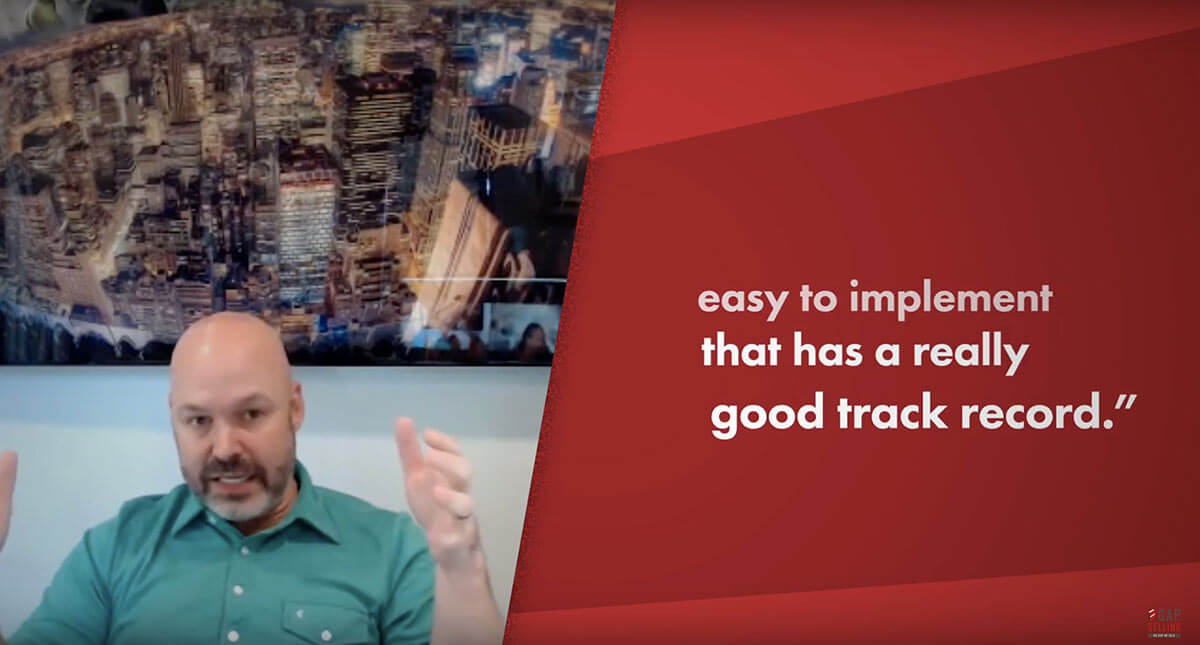
Real Client Testimonial from Chris Adams – Chief Sales Officer @ Scorpion Design
“What was different with A Sales Growth Company was it was about sellers thinking and being engaged, and making sure that they didn't just go through a bunch of questions and answers.”
“We started seeing results almost immediately because of people's enthusiasm”
Long Sales Cycles
Do your deals keep pushing into next month?
Common Questions About Long Sales Cycles
What's causing our long sales cycles?
Long sales cycles usually trace to six causes split across two levels. Three sit with how a specific deal gets worked: a rep who misreads where the buyer stands, no urgency for the buyer to change, or not understanding the buyer's buying process. Three sit above the rep: buyer commitments that got assumed instead of earned, weak discovery before the deal ever reached a pipeline, and missing buyer-verified evidence that stalls a deal in forecast review.
Is a long sales cycle always a rep problem?
Rep execution explains part of it, but cycle length also gets set before a rep ever touches the deal and after a rep has already done real work. Discovery quality determines how much of the cycle gets spent re-discovering a problem that could have been mapped before outreach began, and forecast validation determines whether a deal that looks ready actually has the buyer-verified evidence to close on schedule.
Does discounting at the end of the quarter shorten the sales cycle?
It compresses the calendar date a deal closes, which is a different move than completing the deal's qualification. Harvard Business Review reports that salespeople close roughly three times as many deals at the end of a reporting period as during the rest of it, and lose roughly eleven times as many.
What's the earliest sign a specific deal is going to drag out?
A buyer commitment that gets assumed instead of confirmed — a champion's agreement standing in for sign-off from IT, procurement, or a second decision-maker that was never actually secured. The deal usually stalls at exactly that step, and the elapsed clock keeps running while the rep reworks a stage that was supposed to already be finished.
How do we find out which of these causes is driving our numbers?
Diagnosing which cause is active in a specific pipeline means scoring the deals themselves rather than reading a single average cycle length. ASG's Quick Pulse Revenue Performance Assessment scores a pipeline against twelve yes-or-no questions across the areas most likely to be driving cycle length.
Understanding the Problem
We see it all the time. Deals get pushed month after month, quarter after quarter. What was supposed to be a 3-month sales cycle, turns into a 6-month sales cycle and that's if you're lucky to close it at all. Long sales cycles happen because:
- Salespeople don't understand where the buyer is and why they should buy.
- There is no sense of urgency for the buyer to change
- The salesperson doesn't understand the buyers buying process
When a buyer keeps pushing out a deal, they are signaling they are comfortable with the status quo and therefore don't have a sense of urgency. Too often salespeople miss this clear sign and are unable to get control of the sales cycle. In addition to little to no urgency, too many salespeople are unaware of their buyer's buying process and don't properly calculate the steps and effort required to close a deal after the buyer verbally agrees.
The Organizational Causes Behind Long Sales Cycles
A long sales cycle usually gets diagnosed as a rep problem: a seller who misreads where the buyer stands, fails to create urgency, or misunderstands the buyer's internal process. Those are real causes, and they explain part of the picture. Three additional causes sit above the individual rep: whether each commitment the buyer needed to make along the way got earned instead of assumed, whether the deal was qualified with real buyer data before a rep ever touched the account, and whether the evidence behind the deal was strong enough to survive a forecast review. A rep can work a deal at full effort every day and still watch the cycle stretch for reasons the rep's own effort never touches.
Buyer Commitments Assumed Instead of Earned
A sales cycle moves through a sequence of small agreements rather than a set of stages a deal passes through on a straight line. Each agreement is called the "next yes," a term explained in detail in Gap Selling: a specific commitment from the buyer — an introduction to the CEO, a signed security review, an agreement to send technical specs — that has to happen before the deal can move to whatever comes next. A deal is made up of hundreds of small yeses through the cycle rather than one big yes at the end.
When a rep secures agreement from a champion but never gets a required yes from IT, procurement, or a second decision-maker, the deal stalls at the exact step where a needed yes was skipped or assumed rather than confirmed, and the elapsed clock keeps running while the rep reworks stages that were supposed to already be finished.
Discovery Quality Set Before the Deal Starts
Poor prospecting produces the same downstream symptom before a rep is ever assigned the account: longer sales cycles show up alongside higher customer acquisition cost and lower win rates as a single downstream cost, a pattern covered in Gap Prospecting.
The fix starts before the first outbound email goes out. A Problem Identification Chart, built for a target account profile before outreach begins, maps three columns: the specific problems the product solves, the impact those problems have on the buyer's business, and the root cause underneath each one. When that mapping happens before the deal enters a pipeline, early discovery becomes a confirmation exercise — checking a hypothesis against the buyer's own words instead of starting the search for a problem from zero once the deal is already logged and the sales-cycle clock has already started.
Missing Buyer-Verified Evidence That Stalls a Deal in Forecast Review
The third cause shows up after a rep has already done real work: the deal has buyer engagement, a champion, and a plausible story, but not enough buyer-verified evidence to survive a forecast review. Buyer Input Data, or BID, is the specific, buyer-verified intelligence that proves a buyer's cost of inaction is greater than the cost of action — the specific problem, its business impact, its root cause, and the cost of staying where the buyer is now, confirmed in the buyer's own words rather than the rep's interpretation of them.
The gap in outcome between deals with strong buyer-verified evidence and deals without it is not subtle:
Same reps, same product — the difference is the completeness of the buyer data behind the deal.
BID gets validated against five conditions known as the 5 C's, part of a scoring system called the Buyer Confidence Model, laid out in full in Gap Revenue Performance: Clarity, whether the buyer clearly understands their problem, its root causes, and its business impact; Control, whether the buyer knows how the decision will get made and can navigate the internal process; Consensus, whether the right stakeholders are aligned and bought in; Commitment, whether the buyer is willing to act, change, and invest resources; and Competition, whether the buyer has resolved internal and external alternatives, including doing nothing.
If any one of the five conditions fails to verify, the deal returns to the working stage instead of getting committed to the forecast on the date the rep originally logged. That extension happens because evidence is missing, and it adds real days to however long the deal has already been open.
| Cause | Named Concept | Mechanism | Effect on Cycle Length |
|---|---|---|---|
| Buyer commitment assumed instead of earned | The "next yes" | A required buyer commitment, such as IT or procurement sign-off, never gets confirmed, only assumed | Deal reworks a step that was never finished, adding elapsed time without changing forecast stage |
| Weak discovery before the deal starts | Problem Identification Chart (PIC) | Rep enters the pipeline without a pre-built map of likely problems, impact, and root cause for the account | Early discovery happens after the deal is already logged instead of before, adding time the CRM clock counts |
| Missing buyer-verified evidence | Buyer Input Data (BID) and the 5 C's | Deal lacks buyer-verified confirmation on one or more of Clarity, Control, Consensus, Commitment, or Competition | Deal fails forecast validation and returns to the working stage instead of closing on schedule |
Average sales cycle length is one of several numbers worth tracking as a benchmark by rep, by deal type, and by ideal customer profile, rather than a single average applied across an entire pipeline, since deals in different segments rarely move at the same pace. A rep whose commit and cycle length diverge from the team's historical pattern for that deal type is usually flagging one of the three causes above.
Diagnosing which of the three causes is active in a specific pipeline is a distinction that shows up directly in ASG's Quick Pulse Revenue Performance Assessment, which scores a pipeline against twelve yes-or-no questions across the areas most likely to be driving cycle length.
Diagnosing the Root Cause
When a salesperson pushes out a deal, ask them if they know what the buyer's buying process is. Ask them if they know how long each stage in that buying process is. Push for details, it's not enough for high-level information. Can they be specific? In addition, to understanding the buying process, can the salesperson articulate why the buyer should buy and describe the sense of urgency? When salespeople are unable to articulate a buyer's urgency to change in specific, measurable terms, deals are exposed to slipping into future months and quarters. When salespeople don't know the customer's buying process, they are unable to manage it, and thus they become victims of the process, as deals drag on and on.
How To Fix It
Shortening sales cycles has always been difficult. Salespeople are notorious for just pushing deals out, until they miraculously close or close lost, because . . . (insert a lame salesperson excuse). Fixing long sales cycles starts with discipline from leadership to hold the sales team accountable for identifying and highlighting the buyer's urgency to change and why waiting is more costly than moving forward. Getting your sales team to focus on the existing business problem that is motivating the buyer to change is critical. By honing in on the real problems wrecking havoc in the buyer organization is key to creating urgency and driving deals to close faster. Expect your team to be able to articulate the cost to the buy of not moving forward and indecision. In addition, before opportunities can be moved to later stages in the pipeline, expect salespeople to have asked the buyer for their buying process, who needs to be involved, how long does it traditionally take, what are the steps, etc. Doing this early allows the sales team to manage the steps proactively, cutting days, weeks and sometimes months from the process.
Download the Free ChapterNeed more help with this problem?
Reach Out!Or Do You Think You're Dealing With Other Scenarios As Well?
Low Average Sale Price
When it comes to converting opportunities, the root causes can be extensive. The primary reasons a deal doesn't convert to a client is simply the salesperson.
Tell Me More!
Team Not Converting
When it comes to converting opportunities, the root causes can be extensive. The primary reasons a deal doesn't convert to a client is simply the salesperson.
Tell Me More!
Poor Pipeline Development
When it comes to converting opportunities, the root causes can be extensive. The primary reasons a deal doesn't convert to a client is simply the salesperson.
Tell Me More!All The Way Down Here?
The world of sales has changed drastically and it's not slowing down. ASG Co. understands these changes and is leading the way in helping companies leverage 21st-Century methodologies, tools and approaches to accelerate revenue and reach revenue goals.
Start Your Learning Journey Here