
What's Causing Your Poor Sales Pipeline Development?
Build A Pipeline You Can Predict
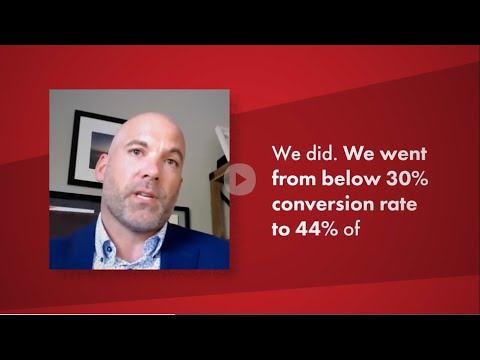
Real Client Testimonial from Ryan Cannady – Chief Retail Officer @ DECU (now Empeople)
Before Gap Selling training, only 18% of DECU's 3,000 members made DECU their primary financial institution. After training, that grew to 40% of 7,000 members, a 5x increase in members who chose DECU as their primary relationship.

Poor Sales Pipeline Development
Is your pipeline unpredictable no matter how much activity goes into it?
Common Questions About Poor Sales Pipeline Development
What's causing our sales pipeline problems?
Most pipeline problems start before a deal ever gets qualified. Reps prospect and qualify opportunities without a shared, documented map of the buyer's actual business problems, so outreach and discovery default to describing the product instead of a problem the buyer already recognizes. Buyers who don't recognize a problem in the first touch ignore the message before a rep's activity ever converts into real pipeline.
Why is our sales pipeline unpredictable or inconsistent?
Without a documented standard for what counts as a qualified opportunity, every rep prospects and qualifies differently. One rep's "qualified" deal is another rep's guess. That rep-to-rep inconsistency is exactly what makes pipeline coverage and forecasts unreliable: there's no shared definition underneath the number.
Why isn't more outbound activity fixing our pipeline problem?
Because activity volume and pipeline quality aren't the same thing. The average B2B cold call connect rate has fallen below 4%, down from roughly 70% a decade ago, and cold email reply rates sit between 1% and 5%. Adding more calls and emails to a message that doesn't reference a problem the buyer already recognizes just produces more ignored outreach at higher volume.
How is this different from qualification frameworks like BANT or MEDDIC?
Frameworks like BANT and MEDDIC teach a rep how to qualify a deal once a problem is already in the room: budget, authority, timeline, decision criteria. They don't teach a rep how to find the problem in the first place. A Problem Identification Chart (PIC) works earlier in the sequence: it gives reps a documented map of the buyer's problems, impacts, and root causes before the qualification conversation even starts.
What are the most common mistakes in sales pipeline development?
Treating a full pipeline as a healthy pipeline, mistaking a buyer's receptivity for real engagement, and failing to disqualify deals early that were never tied to a real business problem. Each of these lets deals sit in the pipeline consuming attention and distorting the forecast instead of moving or getting killed.
How do we find out which of these causes is driving our numbers?
Diagnosing which cause is active in a specific pipeline means scoring the deals themselves rather than reading a single coverage ratio. ASG's Quick Pulse Revenue Performance Assessment scores a pipeline against twelve yes-or-no questions across the areas most likely to be driving pipeline development down.
Understanding the Problem
When it comes to converting opportunities, the root causes can be extensive. The primary reason a deal doesn't convert to a client is that the salesperson never uncovered the buyer's motivation for change. Why should that buyer buy? This lack of understanding can stem from poor qualification criteria up front, so it never was a qualified opportunity to begin with. The CRM or sales software isn't being effectively used, so deals slip through the cracks. Discovery becomes a feature dump where no real value is built to drive the deal forward. All of these root causes lead to opportunities that never convert into customers.
When the pipeline doesn't support the goal, the impact is direct: you won't make your number. You won't hit your growth target. You won't be positioned for acquisition in three years. You won't raise that next round of funding. You won't have the cash to reinvest. A pipeline problem isn't a sales-team problem alone. It's a business problem with a clock on it.
The Front-Door Cause Behind Poor Pipeline Development
Pipeline development problems usually don't start with a slow-moving deal. They start before a deal exists. A Problem Identification Chart (PIC) is the map: the documented set of problems, impacts, and root causes your product solves. Reps use it to know what to prospect and qualify around before they ever pick up the phone or write an email.
Without a shared PIC, reps don't know what to look for, so what they bring back is random and inconsistent from rep to rep. That inconsistency, not a lack of activity, is what makes a pipeline unpredictable.
More activity doesn't move either number. The message still has to give the buyer a reason to respond.
The gap isn't effort. It's what the outreach is built around. When a message describes a problem the buyer already recognizes, they have a specific reason to respond. When it describes a product, the buyer has to decide on their own whether it's relevant, and most don't invest the effort.
| Cause | Named Concept | Mechanism | Effect on Pipeline |
|---|---|---|---|
| Outreach describes the product instead of a recognized problem | Missing PIC at first touch | Reps prospect without a documented map of the buyer's problems, so messaging defaults to a generic value prop | Buyers ignore outreach before activity ever converts into a real pipeline meeting |
| Every rep prospects and qualifies differently | Inconsistent Discovery | No shared standard for what counts as a qualified opportunity | Pipeline coverage and forecasts become unpredictable, since "qualified" means something different rep to rep |
| More activity, same result | Volume Without Problem-Centricity | Teams add outreach volume and tools without changing what the message is built around | Connect rates and reply rates keep falling even as activity increases |
Diagnosing the Root Cause
Implementing firm, consistent qualification criteria that is customer-centric, not BANT or MEDDIC, which are both product- and rep-focused, starts cleaning up the pipeline. A shared methodology creates consistency in how deals get discussed in both deal reviews and pipeline meetings. Structuring value-based conversations around the buyer's business problems outlines a buyer's motivation to change, what they're changing, how, when, and the value of that change.
How To Fix It
Fixing poor pipeline development starts at the first touch, not deeper in the funnel. Gap Prospecting Training, co-created by Keenan and Will Aitken, applies the same problem-centric map from the PIC to outbound specifically: every call, email, and LinkedIn touch gets built around a business problem the buyer already recognizes, instead of a description of the product.
The training runs on the Two Sales Framework: make the first sale, generating curiosity about a problem the buyer recognizes, before making the second sale, the meeting itself. Most outbound training skips the first sale entirely and asks for the meeting before the buyer has any reason to want it.
Download the Problem Identification Chart (PIC) to give your team a documented map of your buyer's business problems before they build another call or email around your product instead.
Need more help with this problem?
Reach Out!Or Do You Think You're Dealing With Other Scenarios As Well?

Long Sales Cycle
When it comes to converting opportunities, the root causes can be extensive. The primary reasons a deal doesn't convert to a client is simply the salesperson.
Tell Me More!
Low Average Sale Price
When it comes to converting opportunities, the root causes can be extensive. The primary reasons a deal doesn't convert to a client is simply the salesperson.
Tell Me More!
Low Sales Conversion Rates
When it comes to converting opportunities, the root causes can be extensive. The primary reasons a deal doesn't convert to a client is simply the salesperson.
Tell Me More!All The Way Down Here?
The world of sales has changed drastically and it's not slowing down. ASG Co. understands these changes and is leading the way in helping companies leverage 21st-Century methodologies, tools and approaches to accelerate revenue and reach revenue goals.
Start Your Learning Journey Here