B2B Sales Training That Puts the Buyer First
Nothing creates urgency like uncovering impactful business problems.
Did you know 86% of B2B deals stall between discovery and close?
Or that only 10% of buyers feel sellers put their needs first?
That’s not a coincidence.
Most reps lead with products, pitch features too early, and never slow down long enough to understand what the buyer’s actually dealing with.
Picture this:
You walk into a doctor’s office and say your knee hurts.
Without asking a single question, the doctor hands you a knee brace and says:
“This one’s our best-seller.”
You’d walk out. And that’s exactly how most sales conversations feel to your buyers.
Experience the Difference
People We Work With:








WHAT IS GAP SELLING
Gap Selling is built on a simple truth: People don’t buy products, they buy solutions to business problems they can’t ignore. Instead of leading with features or benefits, you start with the buyer’s world. What’s broken? What it’s costing? What needs to change?
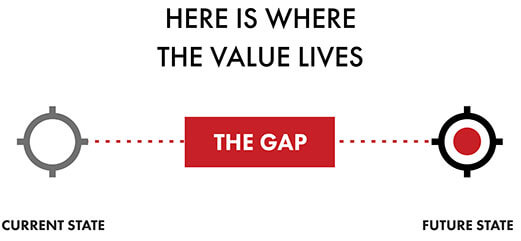
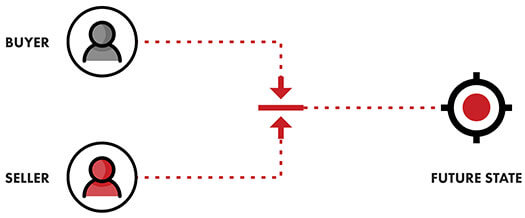
The “Gap” is the space between where the buyer is now and where they need to be. That space is where the urgency to move forward lives. Gap Selling trains your team to: Diagnose real business problems, uncover the cost of doing nothing, connect your solution to critical goals and risks
It’s a shift from selling what you offer to solving what matters.
HOW IS IT DIFFERENT
FROM OTHER METHODOLOGIES?
Most sales methods teach reps to find pain and pitch the fix. They ask a few questions, get the buyer to admit something’s wrong, then start selling. Pain, however, isn’t always enough to drive change. Buyers get used to it. They adjust. They live with the limp. Gap Sellers take a different path. They dig into what the pain is actually doing to the business. Is it costing them revenue? Slowing the team down? Putting goals at risk?
That’s the stuff buyers care about. Deals move forward when buyers have a full understanding of the problem, what’s at stake, and how you solve it.
Addressing The Changes In The Market
Post-pandemic B2B sales has become increasingly challenging, with hesitant buyers and intensified scrutiny on expenditures. Sales teams are struggling with pipeline development, forecasting accuracy, and most importantly, overall performance. These challenges highlight a critical need for baseline skills, a well-defined methodology, customized practice and roleplay.
My team is struggling with…
The Root Causes
When it comes to converting opportunities, the root causes can be extensive. The primary reasons a deal doesn’t convert to a client is simply the salesperson didn’t uncover the buyer’s motivation for change. Why should that buyer by? This lack of understanding can stem from poor qualification criteria up front; it never was a qualified opportunity. The CRM or sales software isn’t being effectively used so deals slip through the cracks. The discovery process is really a feature dump where no real value is built to drive the deal forwarded. All of these root causes lead to opportunities not converting to customers.
Impacts of a Low Close Rate
When sales teams don’t convert deals, the impact in felt throughout a company. Revenue forecasting is wildly inaccurate. Cost of sales and marketing sky rocket. Fulfillment and supply chain are unclear how to plan. Stock holders and board directors become nervous. Salespeople are missing quotas. Growth goals are all on shaky ground.
Addressing Root Causes
Implementing firm and consistent qualification criteria that is customer-centric (AKA, no BANT or MEDDIC. That’s you focused) will begin cleaning up the pipeline. Implementing a sales methodology will create consistency in how deals are discussed in both deal reviews and pipeline meetings. Structuring value-based conversations around the buyer’s business problems will outline a buyer’s motivation to change, what they are changing, how, when, and the value of change.
Future State Outcomes
Can you imagine this beautiful world where your opportunity to closed won is over 50%? Sales forecasting has under 15% variance? Over 80% of your sales team makes or exceeds quota? The stock holders / owners / board are thrilled?
The Root Causes
There are two primary aspects surrounding a low average sale price. 1) Discounting. We all know it, see it, hate it. Whether it's the end of the month, quarter, year, salespeople push discounts to expedite the time to close or to compete on price. 2) Approaching sophisticated sales with transactional mindset. Here, the customer often leads the sale, the value is never defined or realized, and the solution is inevitably the cheapest plan with hopes of upgrades.
Impacts of a Low ASP
Whether its discounts or grabbing the cheap plans, these two approaches can cause major havoc in a company. Mainly: PROFIT! Those pesky discounts can yield low profit, no profit, or negative profit contracts in order to acquire that new customer. Some salespeople have ended up creating a cost of customer acquisition that ends up being 3 years of renewals before that customer begins generating profits. Ouch! The most painful part? It simply was a bandaid covering up the lack of a solid business case for the purchase at full price. All that profit loss was unnecessary.
Addressing Root Causes
Negotiating price to overcome a lack of value is a loosing scenario, even when you "win." Learn how to have business problem conversations and discoveries so the value is clear, compelling, and price isn't a factor. Truly! Would you spend $50,000 to make $5,000,000? That's what I thought.
Future State Outcomes
When price negotiations are out of the sales cycles, your average deal size will go up, the number of deals needed to make quota go down, lead generation efforts become wildly more profitable. It is an efficiency and profitability game here. Get more revenue with less time, effort, money, and headaches.
The Root Causes
Similar to when deals do not convert, a long sales cycle is often related to a messy pipeline, filled with non-customers and truly unqualified opportunities. Sales cycles can also be unnecessarily lengthen due to poor opportunity cadences/management, extended price negotiations that involve excessive back and forth, or those extra sales calls where you are working to feature compare against your competition. What do these items have in common? They are all the traps when business value is missing from the sales cycle.
Impacts of Long Sales Cycles
We hear sales leaders say they need "time management training" for their salespeople. Stop it. No you don't. You need to shorten your sales cycles which is behind the time management problem! Think about it. Let's say your average sales cycle is 6 months, average deal is $50,000 and quota per rep is 1 million. This amounts to 20 deals per year. If each opportunity involves 8 hours per week, this is 208 hours per deal. That's 80 hour work weeks per rep! Cut the sales cycle in half though, and your "time management" problem is gone. Hello 40 hour work weeks! Hello making quota! Hello happy salespeople! Hello good company culture!
Addressing Root Causes
Cleaning up a pipeline means 1) Implementing problem-centric qualification criteria, 2) holding problem-based deal reviews, 3) understanding the business problems and related business value in the purchase, 4) know when you can't help or the value is low so you can stop wasting your time on non-customers.
Future State Outcomes
Picture your sales reps working only a 40 hour work week AND making quota. Or your sales organization collectively hitting targets. They are happy. They have life balance. They stick with you. Long gone are the days 2.8 stars on glassdoor and a 1 year average tenure. Long gone are the days of tedious hiring, product training, ramp times, missed quotas, slow growth, unhappy investors...can you see it? It's a beautiful place when your reps are not spending time and effort on things that don't influence the sale or help your buyers.
The Root Causes
When it comes to building a pipeline, a lot goes into it: outbound efforts, inbound efforts, brand, messaging, market positioning...but truly, in spite of these efforts, so much of outbound and inbound efforts fail simply because they don't connect with why that buyer should even consider your product or services. How will it all help them? Instead, its all you focused: your product, your story, your fancy features, you, you, you.
Impact of Poor Pipeline
When you don't have the pipeline, the number of deals, the size of deals...when the pipeline doesn't support the goal, the impact should be obvious: you won't make your goal. You won't hit your growth target. You won't be prime for acquisition in 3 years. You won't raise that next round of funding. You won't have the cash to reinvest. You just won't.
Addressing Root Causes
Value is an agreement. It is unique to each person, company, and situation. It is not finite. It is fluid, dynamic, and contextual. Your outbound and inbound efforts, messaging, ICP, targeting, all need to align to the value you bring to your customers. The problems you solve for them. It's both simple and hard but critical to success.
Future State Outcomes
When the pipeline is clean and the numbers support the goal, you win! You hit your growth targets! You are ready for a top valuation for acquisition! You raise that now round of funding! You get the cash to reinvest! That beautiful plan you had in mind when you wrote out the revenue targets, you get to do that!
Did You Know?
- Buyers Value Problem-Centric Approaches: buyers are more likely to engage with salespeople when they believe a product will solve their current business problems. 74% are willing to go over budget is the value is present.
- Budget Isn’t the Biggest Issue: Budget, often cited as a concern, is NOT the primary reason deals stall. 37% of buyers cite a salesperson’s lack of understanding of their problems are the top reason they go dark.
Case Studies
Ryan Cannady, CRO of John Deer Employees Credit Union Increased his bank membership
Ryan was tasked with increasing the number of clients who used Deer Employee Credit Union as their primary banking institution. His team was struggling at helping members see the value of the relationship. Before Gap Selling sales training, only 18% of their 3000 members made DECU their primary financial institution. After Gap Selling, they grew that number to 40% of 7,000 members.
%
Increase in Primary Institution
%
Increase in Membership
%
Shorter Sales Cycle Length
%
Positive Culture Change
trusted by: