Structured Deal Review Process
A step-by-step framework for reviewing opportunities, assessing buyer information, and improving pipeline accuracy.
Deal reviews influence forecasting, pipeline confidence, and deal movement, yet the process often varies from one manager or team to another. Leadership teams depend on these conversations for visibility into opportunity strength, but the information shared in each review shifts from meeting to meeting, which limits the ability to evaluate deals accurately.
Across organizations, deal reviews rely on verbal updates, broad summaries, and incomplete buyer information. These inputs leave leaders without a clear view of how an opportunity is developing or where attention is needed. Pipelines expand, but the information required to judge deal quality remains inconsistent.
This framework organizes deal reviews around nine evaluation points that help leaders focus on the information that matters. It gives teams a structured way to assess opportunity health, surface issues earlier, and support decisions that guide deals toward a defined outcome.
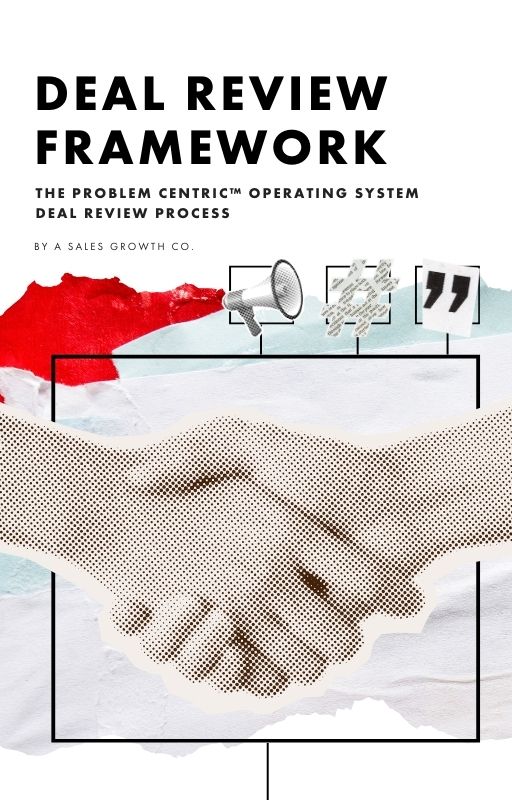
Get Your Free Ebook
What’s Inside
This brief organizes the deal review process into nine evaluation points leaders can use to assess opportunity quality with consistent criteria.
Qualification
How to define qualification standards and evaluate the information required at this stage.
Buyer Input Data (B.I.D.)
The business problems, impacts, and root causes teams must gather to understand buyer motivation and opportunity strength.
Can We Solve the Problem
How to evaluate fit based on the outcomes the buyer expects and the issues uncovered during discovery.
The Buyers
The people involved in the evaluation, their roles, and the information received from each stakeholder.
The Buying Process
The steps, reviews, and approvals that influence how an organization moves from agreement to signed contract.
Decision Criteria
The standards buyers use to compare options and the factors shaping their evaluation.
The Next Yes
The near-term commitments that move a deal forward and how to identify the step required.
Why They Haven't Purchased
How leaders examine whether all required information is present and what conditions may be affecting movement.
Frequency
How often deals should be reviewed and why cadence strengthens pipeline oversight.

Who This Guide Is For
Teams looking for a deeper understanding of opportunity quality and the information that shapes deal movement. It applies to the leaders and teams responsible for reviewing opportunities, interpreting buyer information, and maintaining pipeline accuracy.
It’s built for:
- CROs and revenue leaders responsible for revenue performance and pipeline visibility
- VPs of Sales overseeing execution across the sales organization
- Sales Managers conducting deal reviews and guiding sellers through active opportunities
- Enablement Leaders supporting the processes and training that influence seller effectiveness
- Revenue Operations monitoring forecasting inputs, CRM data standards, and deal progression
- Founders and CEOs involved in selling or reviewing late-stage opportunities
FAQ
How do I evaluate whether an opportunity is progressing with reliable information?
Look for specific buyer-provided details about the business problem, its impact, the root causes, the desired outcomes, the buying process, and the decision criteria. Opportunities progress when this information is complete, validated, and tied to the nine evaluation points of the deal review process.
What information should be present before a deal is added to the forecast?
A deal should have defined qualification, full B.I.D. data, a clear understanding of whether the solution fits the buyer’s needs, documented stakeholders, a mapped buying process, confirmed decision criteria, a specific next commitment, and a reason for its current status. These elements allow leaders to judge deal strength with consistent criteria.
What should a deal review include to support accurate pipeline oversight?
A complete review should cover the problem being solved, the buyer’s agreement with that problem, the strength of the B.I.D. information, the roles of the involved stakeholders, the steps in the buying process, the criteria buyers will use to make a decision, the next required action, and the reason movement has slowed or paused. This set of inputs gives leaders a grounded view of opportunity quality.
How often should deals in my pipeline be reviewed?
Deals expected to close in the current quarter should be reviewed weekly. Frequent inspection keeps information current and reduces the likelihood of outdated or unreliable inputs entering the forecast. Some organizations add asynchronous reviews in the CRM to supplement the cadence.
What criteria should I use to determine if a deal is worth continued investment?
A deal is worth continued attention when the problem is defined, the buyer agrees it needs to be addressed, B.I.D. information is complete, the solution fits the buyer’s expected outcomes, the stakeholders are mapped, the buying steps are known, the decision criteria are understood, the next commitment is clear, and the reason for the current stage is documented.
How can I identify weak or incomplete qualification during a deal review?
Weak qualification appears when the problem is vague, buyer agreement is unclear, the impact is undefined, root causes are missing, or the champion’s role is uncertain. Qualification strengthens when each element, problem, agreement, desire to fix it, and willingness to engage, is supported by specific information.
What should managers look for when evaluating the next step in a deal?
Managers should confirm that the rep can clearly state the next commitment required from the buyer. This may involve access to stakeholders, delivery of technical information, agreement on a review step, or acceptance of a milestone. The next step should be specific, observable, and tied to meaningful movement in the opportunity.
About A Sales Growth Company
A Sales Growth Company builds problem-led training and development programs grounded in the principles of Gap Selling. The work focuses on the information that shapes sales performance, from early outreach through discovery, demos, opportunity management, and forecasting.
The insights used across these programs come from repeated work with revenue leaders, frontline teams, and organizations operating in complex sales environments. These patterns form the basis of the Problem Centric™ Operating System, a system designed to help teams understand the conditions that influence results and the information required to improve execution.
Ready to review the nine elements that shape opportunity quality?
Talk to Us About Training
We can discuss how training helps sellers gather better information, how managers review that information, and how both shape opportunity quality inside the pipeline.