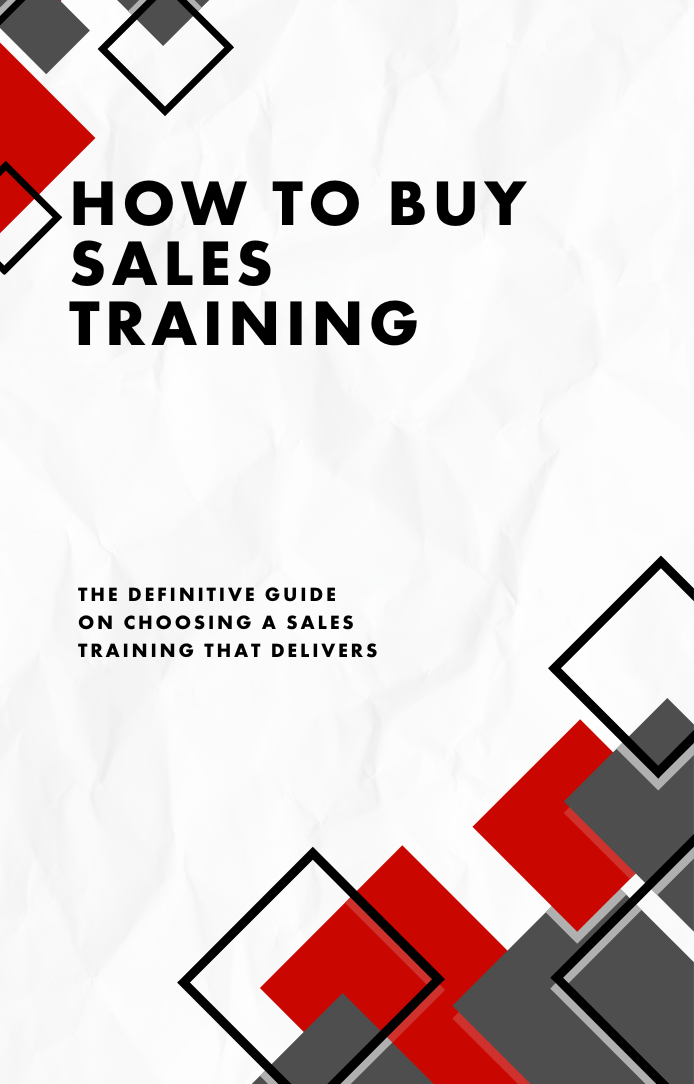
A Structured Guide to Buying Sales Training
A structured process for diagnosing sales challenges and evaluating vendors through seven clear evaluation criteria.
If you’re exploring sales training, or considering it for your team, you’re likely running into the same issue: the market is crowded and hard to read.
Every provider has a method, a philosophy, and a description built on the same overused marketing language. Everything sounds modern or strategic, and many programs frame themselves as a fast path to higher revenue. This makes it difficult to understand what you’re actually evaluating.
Teams usually step into this process because something inside the organization needs attention, an increase in deals dying in the pipeline, a small group of reps carrying the load while others flounder, or declining win rates and revenue. When the pressure is on, it’s easy to move quickly when a familiar brand or a confident proposal shows up.
Training can feel productive in the moment, but many teams finish the experience without a clear sense of what changed or how it affected performance.
This guide introduces a clearer way to approach the decision. It breaks down how to examine what’s happening inside your team and gives you seven evaluation criteria you can use to compare providers consistently and objectively.
Download the Free Guide
What’s Inside
The guide breaks the buying process into two parts and gives you a clear set of criteria to evaluate sales training providers.
Define What You're Trying to Fix
Examining what's happening inside your team and how those issues affect performance. It walks through:
- Identifying whether the challenge is skills-based, process-based, strategic, managerial, or cultural
- Connecting those issues to KPIs such as win rates, deal velocity, ACV, CAC, or pipeline consistency
- Quantifying the impact of those issues
- Outlining the cost of doing nothing
- Creating decision criteria based on what you uncover
This gives you a concrete starting point before entering conversations with any provider.
Build an Evaluation Framework
Introduces seven criteria you can use to evaluate training vendors. These criteria help you compare providers based on how they approach performance improvement and how they support long-term adoption.
The seven evaluation criteria include:
- Problem and root cause alignment
- Buyer and seller logic
- Behavior change
- Reinforcement and embedded behaviors
- Manager enablement
- Measurable outcomes
- Whether the provider sells the way they teach
Common Mistakes and Red Flags
Outlines six mistakes teams make during the buying process and highlights patterns that indicate a program won't sustain change.
The Right Way Forward
Practical steps for reinforcing training once the sessions end. It covers updates to process, CRM usage, coaching habits, and ongoing development so improvements continue after the initial implementation.

Who This Guide Is For
This guide supports the people responsible for shaping revenue performance and selecting programs that influence how teams sell.
Including:
- Chief Revenue Officers leading overall revenue strategy and evaluating investments tied to performance
- VPs of Sales accountable for the execution of the sales team and the consistency of day-to-day selling
- Sales Enablement Leaders responsible for training, development, and the systems that support seller effectiveness
- Revenue Operations Teams monitoring performance metrics and assessing how training affects pipeline and forecasting
Common Questions About Buying Sales Training
What should I look for when evaluating sales training vendors?
Start by examining the issues affecting your team and how those issues show up in your performance metrics. Once you have that baseline, review each provider through seven criteria: how they address your root causes, how their approach aligns with buyer decision-making, how they support behavior change, how they reinforce the material, how they enable managers, how they measure outcomes, and how they conduct their own sales process. These criteria give you a consistent way to compare providers.
How do you measure the impact of sales training?
Begin with the KPIs most affected by your team’s current approach: win rates, deal velocity, ACV, CAC, or pipeline consistency. Connect those metrics to the issues you identify during your diagnostic work. Impact becomes visible when behavior changes inside real opportunities, supported by reinforcement, updated processes, CRM usage, and coaching habits.
What’s the difference between training content and a capability shift?
Content includes the sessions, materials, and exercises used in a program. A capability shift shows up in how sellers think, communicate, and execute inside live deals. A shift depends on behavior change, repetition, reinforcement, and manager involvement. Content alone won’t produce that level of change.
How long does sales training take to stick?
Training becomes part of daily execution when the new behaviors are reinforced. This includes process updates, CRM support, role-plays, coaching frameworks, and regular application inside pipeline reviews and deal work. Without that structure, the material fades within weeks. With it, the behaviors start to take hold.
How do I know if a training provider is credible?
Watch how they run their own sales process with you. Their diagnosis, questions, and problem examination should match the approach they plan to teach your team. This gives you a direct view into their method and how well they model it.
About A Sales Growth Company
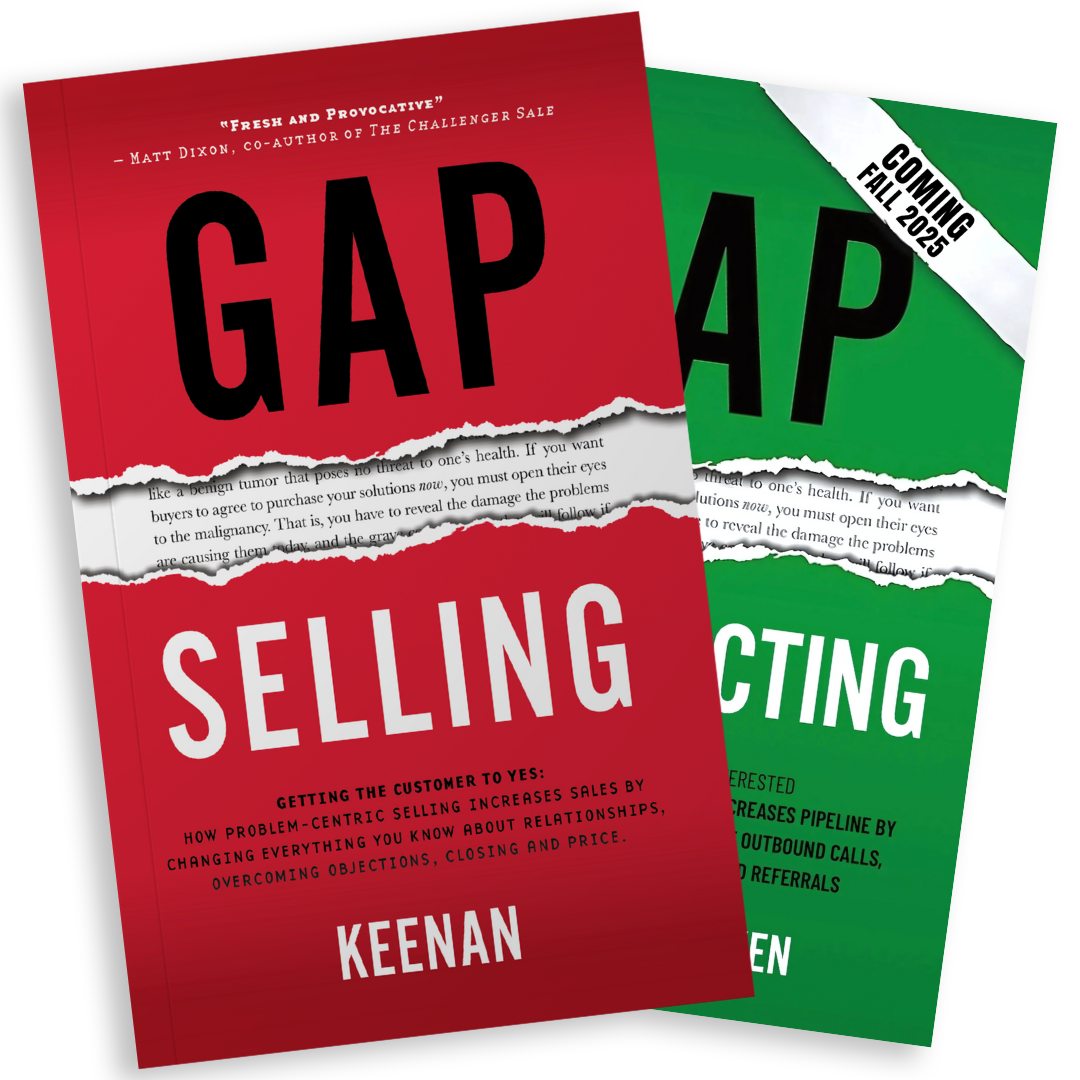
A Sales Growth Company builds sales training and enablement programs based on the Gap Selling methodology. Our work focuses on helping teams improve how they diagnose problems, communicate with buyers, and execute inside active opportunities.
Gap Selling operates on a straightforward idea: buyers make confident decisions when they understand the problems affecting their performance, the impact those problems create, and the causes driving them. Our programs teach sellers how to uncover and position those elements throughout the sales process. This applies to outreach, discovery, demos, and conversations where hesitation or objections surface.
The ideas in this guide come from extensive conversations with sales leaders who attempted to implement training or adopt a new methodology and struggled to generate meaningful progress. Across those discussions, consistent patterns appeared. The breakdowns came from weak diagnostics, misalignment with team needs, and a lack of structure during the buying process. These patterns shaped the evaluation framework in this guide and explain why many leaders question the effectiveness of training.
Ready to evaluate your options with structure and consistency?
Team up with the best
We’re grateful to work with incredible clients




















Talk to Us About Training
We’ll walk through your goals, the problems affecting performance, and whether our approach is a fit.