
The Introduction to Gap Prospecting
What separates a seller who calls it quits on prospecting from one who builds two careers on it, why the connect rates that built Keenan’s first sales career don’t exist anymore, and what replaced them.
The connect rate Keenan built his first career on doesn’t exist anymore. The number of SDRs in B2B sales roles grew 1,200% between 2015 and 2021. The volume of outreach landing in buyer inboxes over the same window grew 12,000%. Every seller inherited the same playbook, more calls, more emails, more touches, and the math was supposed to work itself out. That math assumed buyers would keep answering.
Will Aitken’s turnaround is the counter-evidence. Nine months after discovering a problem-centric approach to selling, he became his company’s first account executive to hit quota six consecutive months. He later applied the same diagnostic thinking to prospecting specifically, across more than 30 sales teams, and recorded a conversion rate over three times the industry average.
This chapter is the case for why that happened, in both authors’ own words, before the rest of the book gets into how.
Get the Chapter: PDF and Audio
"If your team is finding it harder than ever to earn attention in a world where buyers trust less and tune out more, this is the book to read. Gap Prospecting gives leaders a smart, evidence-based playbook to modernize outbound and turn that very first outreach into a remarkable buyer experience."
— Tiffani Bova, 2x Wall Street Journal Best Seller
What’s Inside
Two Careers, One Discipline
Keenan's first day with a phone book on his desk, and Will Aitken's second job interview, won on a bluff he spent the next nine months making true. Different decades, different starting points, the same discipline underneath both turnarounds.
The Math That Stopped Working
The specific numbers behind why a 70%-connect-rate playbook from 1997 fails in a market where SDR headcount grew 1,200% in six years. Not a general claim that "things changed." The actual math a sales leader can hold a budget conversation against.
What Will Aitken Found the Night Before an Interview
The book he bought on Audible, the note he took walking into a second interview, and the result over the next nine months. The chapter names the conversion number this produced across 30-plus sales teams, and why it held up outside of Will's own pipeline.
The Roadmap: Why Before How
The chapter's own argument for taking in the "why" section before the tactics: a seller who skips it will be rudderless the first time a buyer responds in a way no script anticipated. What Part 1 and Part 2 of the book each cover, and the order they're meant to go in.
About A Sales Growth Company
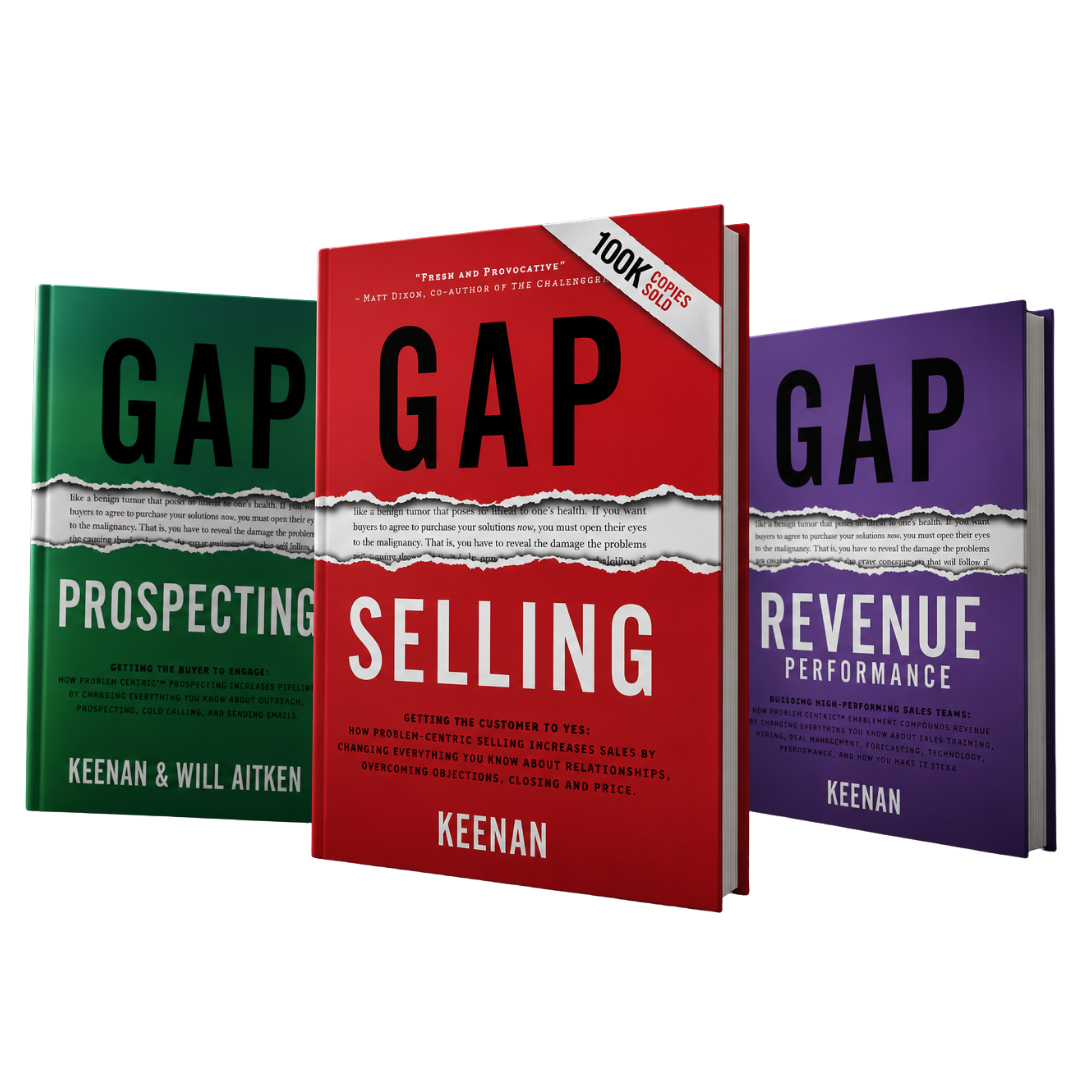
A Sales Growth Company builds sales training and consulting programs on Gap Selling and the Problem-Centric™ Operating System, the same problem-centric approach Keenan applies to prospecting in this book. The firm has worked with B2B sales organizations for 25 years across hundreds of companies. Will Aitken’s 15.6% cold-call conversion rate, documented across more than 30 sales teams, comes directly from applying this methodology to outbound. ASG is named a Representative Vendor in the 2025 Gartner Market Guide for Sales Training Service Providers.
FAQ
What is Gap Prospecting about?
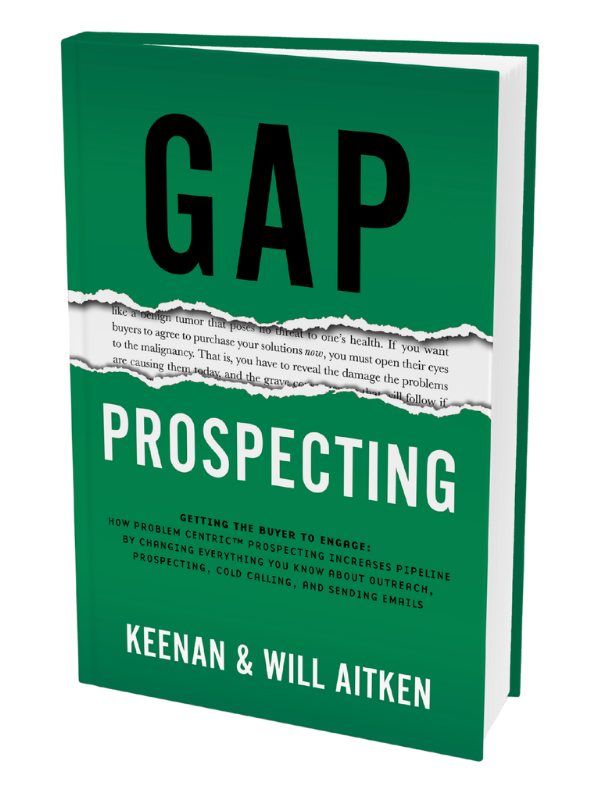
Gap Prospecting is a book by Keenan and Will Aitken that applies the problem-centric diagnostic from Gap Selling to the first stage of the sales process: earning a buyer's attention and engagement before a conversation has started. It covers the psychology behind why buyers ignore outreach and the specific tactics, across calls, email, LinkedIn, and referrals, that earn a reply instead.
Why did Keenan and Will Aitken write a second book specifically about prospecting?
The original Gap Selling book focused on what happens once a sales conversation begins and didn't have room to give prospecting the depth the authors felt it deserved. Will Aitken independently applied gap selling principles to outbound prospecting across more than 30 sales teams and recorded a cold-call conversion rate over three times the industry average, which became part of the evidence base for the book.
Is the introduction chapter useful on its own, without the rest of the book?
Yes. It makes the complete case for why volume-based prospecting has lost effectiveness and previews what Part 1 and Part 2 cover, so you can decide whether the full book addresses the problem you're actually facing before committing to it.