
For fifteen years, the B2B sales industry has been spending more and performing worse.
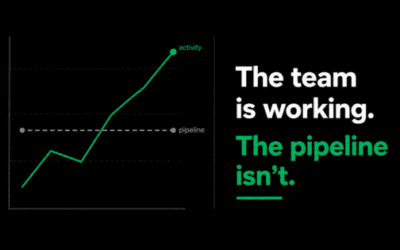
That sentence is not rhetoric. It is the documented trajectory of a sixteen-year period in which CRM spend grew approximately 5.7x, sales enablement platform spend grew approximately 4.8x, the global sales training market climbed to roughly $35 billion annually, and the share of B2B sales reps hitting quota fell from 63% in 2012 to 16% in 2024. Spend up. Performance down. For fifteen straight years.
This page is about what happened, why every fix the industry tried hit a structural ceiling, and what A Sales Growth Company (ASG) built when we realized the existing fixes weren’t going to work. It is also about the methodology we created (Problem Centric® Selling), the operating system we built around it (the Problem-Centric Operating System, or PCOS™), the books that put the discipline in print (Gap Selling, Gap Prospecting, Gap Revenue Performance), the AI sales coach we built on the methodology (AI Keenan, also known as Gap Up), and the clients who installed it and saw their revenue trajectories change.
We’re going to take you through this in some depth. If any of it sounds like the meeting you walked out of last quarter, you’ll know why. If none of it sounds familiar, that’s worth processing too.
TL;DR
Sales performance has been treated as a training problem for fifteen years. The data says it isn’t. Spend went up across CRM, enablement platforms, training markets, and AI tools. Quota attainment, forecast accuracy, sales cycle length, and CAC payback all went the wrong way. The industry has been investing in the right ingredients without ever installing the connecting discipline that would have made the investment compound. A Sales Growth Company is the firm that built that discipline. We created Problem Centric® Selling, built the Problem-Centric Operating System (PCOS™), published the four-book Gap series that defines the category, and operate AI Keenan, the first AI sales coach built on a published, trademarked methodology. We install the operating system that makes a sales organization produce predictable, compounding revenue without depending on heroics, vendor cycles, or favorable conditions.
The Contradiction
Most CROs, CEOs, and boards walking into a sales review in 2026 are looking at a strange paradox. The team has more tooling than it has ever had. The methodology bench is deeper. The training budget is bigger. The AI stack is more capable. The reps are smarter, better educated, and better trained than at any point in the industry’s history.
And yet the number is harder to hit than it was a decade ago. Forecasts are less accurate. Cycles are longer. Pipeline coverage means less than it used to. Win rates are flat or declining. Reps are leaving inside two years. CROs are leaving inside two and a quarter.
If you have been telling yourself this is a market thing, a buyer thing, or a moment-in-the-cycle thing, you are not alone. Most leaders we talk to are doing the same thing. But the data covers fifteen years and crosses multiple economic cycles, industries, ICP segments, and tooling generations. It is not a cycle.
If sales performance was a tooling problem, the largest tooling investment in B2B history would have moved the number. It didn’t. If it was a methodology problem, three decades of mature methodology adoption would have moved the number. They didn’t. If it was a talent problem, the largest investment in sales talent recruiting, ramp programs, and certification in the industry’s history would have moved the number. It didn’t.
The reason the number is harder to hit is that the operating discipline that connects training to behavior, behavior to deals, deals to forecast, and forecast to revenue has been missing from most B2B sales organizations the entire time. The investment landed in pieces. The pieces never connected.
That is what this page is about. The contradiction, the diagnosis behind it, the thesis that explains the failure, and the operating system we built in response.
The Fifteen-Year Failure, Documented
We will move through this with sources. If any of it surprises you, sit with it for a moment before you keep reading.
Quota attainment. In 2012, CSO Insights documented that approximately 63% of B2B sales reps hit quota. By 2024, Salesforce’s State of Sales (6th edition) found that 84% of reps missed quota, leaving 16% at attainment. The share of reps hitting quota collapsed by approximately three-quarters across the period. (Sources: CSO Insights 2012; Salesforce State of Sales, 6th edition, 2024.)
Investment in sales infrastructure. Across the same window, CRM spend grew from roughly $14 billion (2010) to approximately $80 billion (2024), a 5.7x increase. Sales enablement platform spend grew from approximately $1.1 billion (2019) to $5.2 billion (2024), a 4.8x increase. The global sales training market is now approximately $35 billion annually and is projected to roughly double by the end of the decade. Tools per rep approximately doubled, from 5.8 to over 10. (Sources: Gartner CRM forecasts; Grand View Research; Salesforce State of Sales 2022.)
Forecast accuracy. Gartner data published in 2025 shows that only about 7% of B2B sales teams achieve forecast accuracy of 90% or more. More than 72% report forecast accuracy below 80%. Approximately 69% of sales operations leaders say forecasting is harder today than it was three years ago. (Source: Gartner via Clari, 2025.)
Sales cycle length. Median B2B SaaS sales cycles have grown to approximately 84 days, with the mean at 134 days, a 22-25% increase since 2022-2023. Approximately 58% of B2B sales professionals report cycles got longer over the past year. (Source: B2B SaaS sales cycle benchmark studies, 2026.)
Buying committee size. Forrester research published in 2026 shows the average B2B buying committee at approximately 13 stakeholders. The median committee size for deals over $50,000 is approximately 11.2, up from 9.7 in 2024. Each additional stakeholder adds approximately 8-11 days of cycle time. Approximately 86% of B2B purchases stall at some point during the cycle. (Source: Forrester B2B buying committee research, 2026; Bullseye 2026.)
CRO tenure. Average CRO tenure runs approximately 25 months. Annual CRO turnover is approximately 32%. Approximately 62% of companies see revenue growth decline or flatten in the fiscal year following a CRO departure. (Sources: HumanR CRO retention benchmarks, 2026; Pave executive dataset; HBR October 2024.)
Training durability. Research published across multiple sales-training studies indicates that approximately 87% of what is delivered in a sales training workshop is forgotten within 30 days when there is no reinforcement system underneath it. The industry has known this for years and largely continued to buy training without the reinforcement system. (Source: aggregate sales-training retention research.)
Outbound saturation. Average B2B cold email reply rates have fallen from approximately 8.5% (2019) to 3-5% (2026). Average office workers receive approximately 121 emails per day. Executives receive 150-200+. AI-generated emails reply at approximately 2.4% versus fully human at 3.8% and AI-assisted at 5.1%. Approximately 95% of cold emails get zero response. (Sources: Belkins 2025 Cold Email Response Rates Study; Lavender 2025 analysis; Radicati Group Email Statistics Reports.)
CAC payback and unit economics. B2B SaaS unit economics have tightened materially. Sub-12-month CAC payback is cited consistently across SaaS metric studies (KeyBanc Capital Markets SaaS Survey, Bessemer State of the Cloud, OPEXEngine) as the marker of premium valuation. Many companies have drifted into the 18-24 month CAC payback band, which the same studies treat as a structural risk signal. (Sources: KeyBanc SaaS Survey; Bessemer State of the Cloud.)
You can argue with any single line above. We have. The variance from study to study is real, and we cite the sources so you can pressure-test the underlying methodology. But across this many independent datasets, in this many independent dimensions, over this many years, the trajectory is the trajectory. Spend went up. Performance went down. Cycles got longer. Forecasts got less reliable. Buyers got harder to reach. Reps and leaders left faster.
If you have been feeling that pattern in your own organization and second-guessing whether you are reading it right, you are reading it right.
The Environment Around the Failure
The environment underneath the sales function shifted in parallel with the performance collapse. Several of these shifts are worth pausing on, because they explain why fixes that used to work are no longer working.
The buyer changed. Modern B2B buyers complete roughly 60-70% of their purchase decision before they engage a seller. They arrive informed, opinionated, and often skeptical of vendor narratives. They have access to the same product comparison tools, peer reviews, and analyst reports the seller does, sometimes more current. The buyer no longer needs the seller for information. They need the seller for diagnosis, problem identification, and the parts of the decision process they cannot do alone. Most reps were never trained for that.
The buying committee expanded. The committee size doubled. Procurement, legal, security, and finance got involved earlier. The end users, the technical evaluators, the departmental heads, the CFO’s analyst, the COO’s chief of staff, and the executive sponsor are now all in the room or one slack channel away from it. Single-threaded deals die at twice the rate of multi-threaded deals. Most sales motions still assume a single buyer.
Outbound saturation reached a structural ceiling. The buyer’s inbox is full. The dial-to-connect ratio is 18+ to 1. The cold email reply rate is under 5%. Volume tactics produced more of the bad thing. AI-generated email made the saturation worse, not better. The seller who creates intrigue and earns the meeting on substance now has a structurally easier path than the seller running another sequence variant.
Procurement and legal stretched late-stage timelines. For deals over approximately $25,000 of annual contract value, most enterprise buyers now run a formal procurement process. The 30-45 day legal cycle has nothing to do with whether the product is good. Together with evaluation, procurement and legal can account for 60-70% of the total cycle. Reps who don’t architect for procurement from day one get blindsided at the wire.
The CRO seat became the C-suite ejector seat. With average tenure under 25 months and roughly one in three turning over annually, the CRO has less time than ever to install anything durable. The structural pressure pushes the CRO toward short-cycle fixes (heroics, discounting, deal pull-forward) that produce a quarter and burn the next two. The succession churn ensures that the operating discipline a company would need to install to break the cycle rarely gets a long enough runway to take hold.
The AI sales tool wave automated the easy half. A meaningful share of the AI sales tooling deployed in 2024-2026 automates research, sequencing, summary, and follow-up. These are the tasks reps spent the most clock time on, which made the automation feel productive. The hard half of the job — diagnosis, problem identification, consensus building, problem reframing, holding tension — was not automated and remains the determinative half. The orgs that bought AI tools without first installing the operating discipline that converts diagnosis into closed revenue saw the easy half get faster and the win rate stay flat.
The forecast became politically distorted. As CROs got rotated faster and the buying environment got harder, forecast calls became negotiations rather than diagnostic exercises. Coverage at 4x became the threshold below which the conversation got uncomfortable. The pipeline padded with stalled deals to clear the threshold. The forecast accordingly carried fiction. Few people inside the org had the room to say so. The buying-event diligence team eventually did.
If you are reading these and thinking each one of them describes a separate problem in your org that you’ve been managing in isolation, you are seeing the same pattern we did. They are not separate problems. They are the symptoms of one structural absence.
Why Every Fix Hit a Ceiling
For each shift above, the industry produced a fix. For each fix, the fix worked partially and then stopped at a layer that did not produce compounding change. Pause on the pattern below — it is the diagnostic that explains the thesis.
The training fix stopped at the workshop. Methodology training delivered the framework. Reps absorbed it. Then they returned to organizations that did not run the methodology in deal reviews, did not inspect for it on the forecast call, did not coach to it weekly, and did not measure it. The training faded inside 30 days because the system around the trained rep continued to demand the same behaviors it had demanded before the workshop. The methodology was sound. The org never installed the discipline.
The tooling fix stopped at the dashboard. CRM, enablement platforms, conversation intelligence, revenue intelligence, and AI tooling delivered visibility, automation, and analytics. They did not deliver inspection. The dashboard told the manager what was happening; it did not tell the manager whether the methodology was being run inside what was happening. The tools were valuable. They were not a substitute for the operating discipline they assumed someone else would install.
The methodology bench grew without anyone connecting it. B2B sales orgs accumulated multiple methodologies (qualification frameworks, opportunity management frameworks, account planning frameworks, discovery models, value-selling models) and used them in isolation across teams, regions, and tenure bands. The result was a vocabulary problem masquerading as a methodology problem. Reps used different definitions of qualified, committed, and forecast. Managers couldn’t coach across teams. Forecast calls couldn’t compare apples to apples.
The hiring fix stopped at the headcount. Higher hiring bars, longer recruiting cycles, larger ramp programs, and richer comp plans all aimed to fix the people problem. Ramp times inflated rather than compressed. Turnover stayed elevated. The replacement reps walked into the same organizational conditions that produced the previous reps’ churn. The hiring discipline was sharper. The receiving organization wasn’t.
The fractional executive fix stopped at the person. Fractional CROs and fractional Heads of Sales delivered capability. When the contract ended, the capability left. The operating discipline that would have made the capability durable rarely got installed during the engagement because the engagement was structured to make the senior the linchpin, not to make the system the linchpin.
The AI fix stopped at the easy half. AI sales tools automated research, sequencing, content generation, summary, and follow-up. They left the hard half — diagnosis, problem identification, gap discovery, consensus building, problem reframing — untouched. Reps got faster at producing volume. Orgs got more volume. Buyers got more noise. Reply rates dropped. Win rates stayed flat.
The big-firm transformation fix stopped at the slide deck. Commercial transformation engagements from large consultancies produced strategy decks, target operating model diagrams, and recommended sequences. Implementation was assumed to be the client’s problem. The implementation rarely happened because the client had hired the consultancy to solve the implementation problem.
Look at this list with your own organization in mind for a moment. How many of these fixes have you funded over the last five years? How many of them produced a durable change in win rate, forecast accuracy, ramp time, CAC payback, or NRR? If the answer to the first question is “several” and the answer to the second is “I’d have to check,” you’re seeing the pattern we did.
The Thesis
Sales performance is a system problem. Workshops, tools, methodologies, headcount, fractional executives, AI sales tools, and slide-heavy transformation engagements are not systems. They are inputs. A system is what connects inputs into a discipline that compounds across every quarter, every CRO change, every market shift, and every customer cohort.
For fifteen years, the B2B sales industry has been treating a structural problem as a training problem. The result is rising investment and falling performance, documented across every credible third-party dataset that covers the period. Each individual fix the industry produced operated in isolation. Training in isolation fades. Tools in isolation produce activity. Headcount in isolation produces churn. Methodology in isolation produces vocabulary. Frameworks in isolation produce confusion. AI in isolation produces noise. None of them produce compounding revenue. None of them were ever going to.
What was missing was the operating discipline that connects the layers a sales organization has to run together: how the rep is trained, how the rep is coached, how the deal is reviewed, how the forecast is committed, how the manager bench is developed, how the cultural pillars are anchored. Most sales orgs have all of those activities. Few of them have those activities running as a connected system. Without the connection, the investment in any one layer cannot compound into the next.
A Sales Growth Company exists because we watched the industry under-invest in the connection while over-investing in the inputs, and we built the connection. Our methodology, Problem Centric® Selling, is the operating language of the discipline. Our operating system, PCOS, is the installed infrastructure that makes the language run at company scale. Our books are the published canon. Our AI coach is the methodology in software. Our case proof is what happens when an organization installs the connection.
That is the thesis. Sales performance is a system problem. Only a system fixes a system problem. We built the only system that connects the layers the industry left disconnected.
The rest of this page is what that system is, why it works, where it has worked, and where to start if any of this is describing your organization.
What We Built in Response
Everything below this section is the operating substance of the discipline. If you skim from here, you’ll miss the answer to the diagnosis above. If you read carefully, you’ll see how each component is the response to a specific structural failure described in the diagnosis.
Problem Centric® Selling — The Methodology
Problem Centric® Selling is the registered methodology ASG created and trademarked. The core claim is operational, not philosophical: people don’t buy products. They buy solutions to problems they cannot solve themselves. When the seller leads with the buyer’s problem, the buyer engages. When the seller leads with the product, the buyer disengages, qualifies harder, discounts more, and churns faster.
The methodology rests on a specific structural discipline. Before any product conversation, the seller’s job is to find, define, and quantify the buyer’s gap between current state and desired future state. The gap is the deal. The gap is what the buyer is paying to close. The product is the means.
This is the discipline taught in Gap Selling, the 2018 book that became an Amazon #1 bestseller in sales, sold over 150,000 copies, and established the foundational text of the Problem-Centric category. Gap Selling introduced the discipline to a mainstream B2B sales audience and made the framework reproducible at the individual rep level. Gap Prospecting (2026, co-authored with Will Aitken) extended the discipline upstream into outbound and pipeline creation. Gap Revenue Performance (2026) moves the discipline up another altitude into organizational design, the operating system, and the manager bench that runs it. Gap Customer Success (releasing later in 2026) completes the canon by extending the discipline into expansion and renewal.
Four books. One discipline. One trademarked category. A published canon that allows the methodology to be pressure-tested in print before any sales conversation begins. Most methodology vendors do not publish their full system. We do because the work is too important to hide.
The Problem Identification Chart (PIC)
The Problem Identification Chart (PIC) is the diagnostic framework ASG built to map a buyer’s situation. The PIC organizes a buyer’s surface symptoms into a structured chain: Root Cause → Problem → Impact. The chain is the operating taxonomy of the Problem-Centric discipline.
Root Cause. A broken process or tool. Always. Fixable directly. Examples: “We don’t have a documented coaching framework.” “Reps don’t update CRM after every call.” “Our LMS doesn’t integrate with the CRM.” “We don’t have a Buyer Input Data standard.” Root Causes are easy to find. A buyer will surface them in the first ten minutes of any discovery call. Most reps stop here and think they’ve done discovery.
Problem. The business outcome the broken process produces. Cannot be fixed directly because it lives downstream of the cause. Examples: “Low win rates.” “Missed quota.” “High customer churn.” “Forecast accuracy under 60%.” “Average deal cycle 40% longer than category benchmark.” The Problem is what the buyer is actually paying to solve. People don’t buy to fix Root Causes. They buy to fix Business Problems.
Impact. The downstream business consequence of the Problem. The boardroom view that motivates the buyer’s CEO to act. Examples: “Margins compressed.” “Customer churn rising.” “CAC payback over 18 months.” “Valuation discount in the next funding round.” “Inability to invest in expansion.” The Impact is the consequence that gets executive sign-off on the fix.
A rep who articulates only Root Cause sounds like a vendor describing a feature gap. A rep who articulates Root Cause → Problem → Impact sounds like someone who understands the buyer’s business. The difference is the PIC.
Every Problem-Centric sales organization operates from a PIC built once, validated by real buyers, and used as the master map for every deal the team works. Most companies do not have one. This is the first artifact we build inside any PCOS engagement.
Buyer Input Data (BID)
Buyer Input Data (BID) is the deal-level evidence reps surface during discovery. Keenan created BID as the qualification and CRM framework that replaces seller opinion with buyer-verified evidence: the documented problems, impacts, and data that determine whether a deal is real. BID is the buyer’s own words, the buyer’s own quantifications, and the buyer’s own evidence that fills out the PIC for a specific opportunity. Where the PIC is the company’s strategic master map, BID is the rep’s tactical evidence per deal.
The operational implication is significant. In a Problem-Centric sales organization, every commit-stage deal has documented BID supporting it. Deal reviews inspect the BID, not the rep’s confidence. Forecast calls trust the BID, not the close date in CRM. The forecast tightens because the evidence holds, not because the rep was persuasive. BID is the link between methodology and inspection that most sales orgs never install.
The 5 C’s
The 5 C’s are ASG’s qualification dimensions and the operating substrate of the Buyer Confidence Model, the framework Keenan built to score how real a deal actually is. There are five: Clarity, Control, Consensus, Commitment, and Competition. Together they are the criteria a deal must satisfy to earn its place on the commit forecast, and how a Problem-Centric organization scores a deal at every stage of the funnel.
The 5 C’s are constructed differently from the qualification frameworks the market has been using. MEDDIC, MEDDPICC, BANT, CHAMP, GPCT, and similar frameworks are scoring checklists. They tell the rep whether the deal is real. They do not tell the rep how to engage. The 5 C’s are a methodology dimension as well as a qualification dimension. They tell the rep what to look for, what to ask, and how to evaluate evidence. They tell the manager what to inspect. They produce a Buyer Confidence read on every deal that managers can defend and forecast calls can trust.
The mechanism proof of the 5 C’s is consistent across PCOS-installed sales organizations: deals scored green on the 5 C’s close at approximately 63%. Deals scored red on the 5 C’s close at approximately 8%. Same reps, same product, same market. The variance is explained entirely by the inspection discipline the framework requires and the operating system installs.
If your current qualification framework is doing the scoring work but not the engagement work, you are seeing one of the structural reasons your methodology investment hasn’t compounded.
The Four Orgs
The Four Orgs framework, introduced in Gap Revenue Performance, is the diagnostic typology that names the operating model your sales organization is actually running. There are four. Three of them produce revenue without compounding it. One of them compounds.
The Random Org has the inventory of a system — playbooks, methodology, CRM fields, training programs, a vendor list — but no organizing logic above them. Each piece was bought or built reactively, in isolation. Strategic priorities shift every few weeks; the function reacts to each one. The team produces motion, not durable performance.
The Heroic Org makes the number through brute force and will. End-of-quarter discounting, deals pulled forward from next quarter, manager rescue of deals off rep desks, top reps personally carrying the deals that matter. Each quarter borrows from the next. The wheel turns faster until it breaks.
The Peacock Org has built well-designed enablement work that does not connect to business outcomes. Programs ship. Certifications complete. Dashboards populate. Win rate hasn’t moved in eight quarters because the inspection layer above the work doesn’t exist.
The Compounding Org is the destination. The system, not the people, holds the line. Forecast variance compresses quarter over quarter. CAC payback tightens. The number gets made without brute force, without burning future quarters, and without depending on the heroic CRO who happens to be in the seat.
Most sales organizations are a hybrid of the first three, with the mix shifting under pressure. Strategic chaos pushes toward Random. CRO turnover pushes toward Heroic. L&D-trained enablement leadership pushes toward Peacock. Compounding is the only state that holds under all three pressures because the system holds.
PCOS is the installation playbook that moves a sales organization from any of the first three states to the fourth. If you read the four definitions above and recognized your own organization inside fifteen seconds, you are not alone. Most CROs do. The recognition is the first step. The build is what PCOS is for.
The Problem-Centric Operating System (PCOS™)
The Problem-Centric Operating System (PCOS™) is the operating system that runs Problem-Centric Selling at company scale. PCOS is the connecting discipline most sales orgs do not have and every Compounding Org runs. It is the first end-to-end operating system in the category because we built the layers other firms left disconnected.
PCOS is organized around three connected layers and one inspection layer:
The Skills Layer is what the rep can do. It includes the methodology training (Gap Selling for AEs, Gap Prospecting for SDRs, Gap Manager for frontline leaders), the certification gates, the role-play discipline, the manager-level capability development, and AI Sales Coach reinforcement that operates daily inside the rep’s workflow.
The Opportunity Layer is how deals get worked. It includes the deal review cadence, BID inspection at every commit-stage deal, the 5 C’s scoring discipline applied to every commit deal, the demote-on-missing-evidence rule, the lost-deal debrief cadence, and the weekly video review that surfaces skill gaps the next training cycle has to fix.
The Forecast Layer is how the number gets committed. It includes the forecast call structure rebuilt around 5 C’s evidence defense, the Sales Operations audit role that randomly samples 5% of commit-stage deals against their evidence, the forecast accuracy metric published weekly at team and manager level, and the improvement loops that connect forecast misses backward into the Opportunity Layer cadence and the Skills Layer curriculum.
The Manager Linchpin sits across all three layers. The frontline manager is the load-bearing role the system depends on. PCOS includes a complete manager system: JD rewrite, span correction, ODP coaching cadence calendar-protected and running weekly, manager calibration sessions across the bench, scorecard reset to rep-growth metrics, and manager bench mapping by Linchpin profile (green / yellow / red).
The result is a connected system instead of a stitched-together stack of programs. The methodology lands because the system demands it. The training sticks because the inspection layer reinforces it. The forecast holds because the evidence chains back to documented buyer reality. And the number gets made without depending on heroics, vendor cycles, or favorable conditions.
PCOS has four implementation tiers. Tier 1 (PCOS Diagnose) is a four-week, fixed-fee diagnostic that builds your PIC, your Nine Numbers baseline, your manager bench map, and locates your organization on the Four Orgs framework. Tier 2 (PCOS Skills + Capability) installs the Skills Layer, the manager system, and the Opportunity Layer cadence. Tier 3 (PCOS Full Install) connects the Forecast Layer and installs the cross-layer improvement loops. Tier 4 (PCOS Operate) is the ongoing operational layer that prevents drift and keeps the system Compounding.
We share the architecture, pricing range, and timing publicly because the work is too important to hide behind a discovery call.
AI Keenan and Gap Up
AI Keenan, also known as Gap Up, is ASG’s AI sales coach. It is the first AI sales coach in the market built on a documented, published, trademarked sales methodology. Every other AI sales tool we have evaluated is built on generic best practices or call-recording pattern matching. AI Keenan is built on Gap Selling and Gap Prospecting, two of the most-adopted B2B sales methodologies of the last decade, and trained on hundreds of hours of Keenan’s own coaching and deal reviews.
The distinction is operational. A generic AI sales tool tells a rep to “follow up and add value” when a deal stalls. AI Keenan tells the rep specifically what they have not validated in the buyer’s PIC, where the gap is weak, and what the next move is to reopen the deal. A generic AI tool rewrites a cold email to be shorter or catchier. AI Keenan rewrites the email around the buyer’s failure pattern and the stakes in their environment, the way a Problem-Centric seller would. A generic AI tool tells a rep their pipeline looks fine. AI Keenan tells the rep which deals are real, which are bloated, which are in danger, and where to focus the next ninety minutes.
AI Keenan operates as an always-available manager. It analyzes deals, reviews emails and calls, runs role-plays, pressure-tests questions before a call, debates the rep when they push back, and produces focused coaching sessions when it sees the same gap repeat across the rep’s pipeline. The Skills Layer and Opportunity Layer of PCOS delivered as software.
It is free to start. One real deal or one stalled outbound thread is enough to evaluate it. Most reps know whether it is working after a single test.
What Compounding Revenue Looks Like
The case for the operating system is not theoretical. The clients who installed it can show the numbers.
Emburse, under CRO Matt Gahr, integrated seven sales teams and over 100 reps onto the Problem-Centric Operating System. Bookings grew 140%. Win rates climbed 23 percentage points. Average deal size grew 70%. Replacement deals against competitors doubled.
Televerde, under EVP of Global Sales Alicia Rasta, evaluated Miller Heiman, SPIN, and Challenger before selecting Gap Selling. Their sales cycle dropped from 18 months to 89 days. Win rates climbed from 11% to 24%.
Cart.com, with Randy Ray, had been through Sandler and Challenger before adopting Gap Selling. Average deal size grew 300%. Win rates climbed 20 percentage points. Results showed inside 90 days.
ARMS Reliability, with COO Darren Gloster, closed a $7 million revenue gap inside twelve months. Bookings grew 38%. The company was subsequently acquired by Baker Hughes, a Fortune 500 buyer, as a direct result of the operational lift the discipline produced.
Across these and many other engagements, one mechanism proof point recurs: in a sales organization where deals are scored on the 5 C’s at commit stage, green-scored deals close at approximately 63%. Red-scored deals close at approximately 8%. Same reps, same product, same market. The variance is explained entirely by the inspection discipline the methodology requires and the operating system installs.
These are not training outcomes. Training outcomes fade. These are operating-system outcomes. They hold because the system holds.
If your last methodology rollout produced a six-month bump that faded by the third quarter, you are seeing what happens when training is installed without the system underneath it. If your forecast accuracy hasn’t tightened across three different CRO tenures, you are seeing what happens when the inspection layer is missing. If your win rate has been flat across two AI tool generations, you are seeing what happens when the AI was pointed at the easy half.
The system fixes what the inputs alone cannot.
The Foundation Behind Our Authority
The credibility of the work rests on a stacked foundation. We will name each element so it can be verified independently.
Published methodology, four books and counting. Gap Selling (2018, Amazon #1 bestseller in sales, 150,000+ copies). Gap Prospecting (2026, co-authored with Will Aitken). Gap Revenue Performance (2026). Gap Customer Success (releasing later in 2026). Every claim ASG makes about Problem-Centric Selling can be verified by reading the books. We publish the methodology so the market can pressure-test it before buying. Most methodology vendors do not.
Major media recognition. Keenan’s work and ASG’s frameworks have been featured in Forbes, Harvard Business Review, MIT Sloan Management Review, Inc. Magazine, and Fast Company. Keenan has been named one of the Forbes Top 50 Social Sellers in the World. The press surface is multi-publication and multi-decade because the work has stayed in the conversation as the discipline has evolved.
Original buyer research. How Buyers Want to be Sold. ASG’s proprietary 1,200-buyer survey designed to answer what B2B buyers actually want from sellers today, where sellers consistently miss, and what changes the engagement. The research is freely available on salesgrowth.com. It informs every framework and recommendation we publish.
Gartner recognition. ASG was named a Representative Vendor in the Gartner 2025 Market Guide for Sales Training Service Providers. Third-party validation that the methodology has reached market scale and the firm has reached operating scale.
Registered marks. Problem Centric®, PCOS™, the Gap Method™, and the Buyer Confidence Model are the registered and named marks of A Sales Growth Company. The category we defined is one we have the legal authority to continue defining.
Client list. Verizon, Palo Alto Networks, Citrix, Emburse, PitchBook, ARMS Reliability, GE Healthcare, Intel, and many others. The full customer story catalog is available on salesgrowth.com.
Operating mechanism proof. The 63% versus 8% close rate gap between green-scored and red-scored deals, same reps, same product, is not a one-client artifact. It recurs across PCOS-installed sales organizations and is the operating signature of the methodology working.
Author’s own voice. Keenan publishes the methodology in books, on the salesgrowth.com blog, on LinkedIn, and on Substack. Every framework ASG sells is in print, where it can be read, criticized, and tested before any sales conversation begins. That is the basis of the authority. We do not hide the work.
Frequently Asked Questions
What does A Sales Growth Company (ASG) do?
A Sales Growth Company is a B2B sales performance firm. We created Problem Centric® Selling, built the Problem-Centric Operating System (PCOS™), published the four-book Gap series, and operate AI Keenan, the first AI sales coach built on a published, trademarked methodology. We install the operating discipline that makes a sales organization produce predictable, compounding revenue without depending on heroics, vendor cycles, or favorable conditions. For company history, leadership, and analyst recognition, see our About page.
Who created Problem Centric® Selling?
Problem Centric® Selling was created by Keenan, the founder and CEO of A Sales Growth Company. It is the registered methodology that defines ASG’s discipline. The methodology was introduced to a mainstream B2B sales audience in Gap Selling (2018) and operationalized at the organizational level in the Problem-Centric Operating System (PCOS™).
Why has B2B sales performance declined over the past fifteen years?
Across the period from approximately 2010 to 2024, B2B sales performance declined while sales investment grew. Quota attainment fell from approximately 63% (CSO Insights, 2012) to 16% (Salesforce State of Sales, 2024). Across the same period, CRM spend grew approximately 5.7x and sales enablement platform spend grew approximately 4.8x. The cause is structural. The industry invested in training, tooling, methodology, and headcount without installing the operating discipline that connects those investments into a system that compounds. Each input was sound. The connecting tissue was missing.
What is the Problem-Centric Operating System (PCOS™)?
The Problem-Centric Operating System (PCOS™) is the operating system that runs Problem-Centric Selling at company scale. PCOS connects three layers (Skills, Opportunity, Forecast) plus the manager bench that runs all three. It is the first end-to-end operating discipline for B2B revenue organizations and the only one that connects the Problem Identification Chart through the rep’s skills, the deal review cadence, the forecast call, and the manager bench. PCOS is what most sales organizations don’t have and every Compounding Org runs.
How is ASG different from sales training vendors?
Sales training vendors deliver methodology in a workshop and assume the organization will adopt it afterward. They install training. ASG installs the operating discipline that the training requires to stick: the manager cadence that runs the methodology in deal reviews, the inspection layer above the deal review, the forecast structure that depends on documented buyer evidence, and the improvement loops that connect forecast results back into training. Training alone fades within 30 days when the organization around the trained rep continues to demand the behaviors it demanded before the workshop. The system is what makes the training stay.
What is the PIC (Problem Identification Chart)?
The Problem Identification Chart (PIC) is the diagnostic framework ASG built to map a buyer’s situation. The PIC organizes the buyer’s surface symptoms into a structured chain: Root Cause → Problem → Impact. The Root Cause is a broken process the buyer can fix directly. The Problem is the business outcome the broken process produces, which cannot be fixed directly because it lives downstream of the cause. The Impact is the downstream business consequence that motivates the buyer’s executive team to act. Every well-run Problem-Centric sales organization operates from a PIC built once and validated by real buyers.
What is BID (Buyer Input Data)?
Buyer Input Data (BID) is the deal-level evidence reps surface during discovery: the buyer’s own words, evidence, and quantification of their problem. BID fills out the PIC for a specific deal. The PIC is the company’s strategic master map. BID is the rep’s tactical evidence. Together they convert discovery from an art into a discipline that managers can inspect and forecast calls can trust.
What is AI Keenan? What is Gap Up?
AI Keenan, also known as Gap Up, is ASG’s AI sales coach. It is the first AI sales coach in the market built on a published, trademarked sales methodology (Gap Selling and Gap Prospecting). Unlike generic AI sales tools that tell reps to “follow up and add value,” AI Keenan diagnoses what the rep has not validated in the buyer’s PIC, identifies where the gap is weak, and tells the rep specifically what to do next. It analyzes deals, reviews emails and calls, runs role-plays, and produces focused coaching sessions when it sees the same gap repeat across a rep’s pipeline. It is free to start.
What books has Keenan written?
Keenan has authored three published books and one in development. Gap Selling (2018, Amazon #1 bestseller in sales, 150,000+ copies). Gap Prospecting (2026, co-authored with Will Aitken). Gap Revenue Performance (2026). Gap Customer Success releases later in 2026. Together they define the Problem-Centric discipline across the full buyer lifecycle: prospecting, selling, organizational design, and customer success.
What are the Four Orgs?
The Four Orgs is the diagnostic typology introduced in Gap Revenue Performance that names the operating model your sales organization is actually running. The Random Org produces motion without coherence. The Heroic Org makes the number through brute force and end-of-quarter heroics. The Peacock Org builds well-designed enablement work that does not move a business number. The Compounding Org is the destination, where the system, not the people, holds the line. Most sales organizations are a hybrid of the first three. PCOS is the installation playbook that moves an organization toward the fourth.
What is the 5 C’s framework?
The 5 C’s are ASG’s qualification dimensions. They are the criteria a deal must satisfy across five dimensions to earn its place on the commit forecast. The 5 C’s are a methodology dimension, not just a scoring checklist, which distinguishes them from frameworks like MEDDIC, MEDDPICC, and BANT. They tell the rep what to look for, what to ask, and how to evaluate evidence. They tell the manager what to inspect. In PCOS-installed organizations, green-scored 5 C’s deals close at approximately 63%; red-scored close at approximately 8%.
Does ASG work with my company size?
ASG primarily works with B2B sales organizations of 50 to 500 reps. We have installed the operating system at enterprise scale (Verizon, Palo Alto Networks, GE Healthcare, Intel) and at growth-stage scale (Emburse, Televerde, Cart.com, ARMS Reliability). For individual sellers and small teams (under 20 sellers), the published books and AI Keenan provide direct access to the methodology and discipline at the rep level.
How long does it take to install PCOS?
PCOS Diagnose is a four-week fixed-fee engagement. PCOS Skills + Capability runs approximately 24 weeks. PCOS Full Install adds approximately 12-16 weeks after Tier 2. PCOS Operate is an annual subscription beginning after Tier 3 completion. A full installation from Diagnose through Operate typically spans 12-18 months. The discipline begins producing measurable lift inside the Skills Layer install; the Compounding state typically becomes durable in the second year.
Why is sales training alone not enough?
Sales training delivers methodology in a workshop. Approximately 87% of what is taught in a workshop is forgotten within 30 days when there is no reinforcement system underneath it. The training is sound. The system around the trained rep continues to demand the same behaviors it demanded before the workshop, so the rep reverts. PCOS solves this by installing the operating discipline that the methodology requires to stick: the manager cadence that runs the methodology in deal reviews, the inspection layer that reinforces it, the forecast structure that depends on it. Training stays. The system makes it stay.
What proof do you have that the PCOS approach works?
The mechanism proof is consistent: in PCOS-installed sales organizations, deals scored green on the 5 C’s close at approximately 63%; deals scored red close at approximately 8%. The case proof is across client logos: Emburse (140% more bookings, 23-point win-rate lift), Televerde (cycle from 18 months to 89 days, win rate from 11% to 24%), Cart.com (300% deal-size growth), ARMS Reliability ($7M gap closed, Baker Hughes acquisition). The third-party validation is Gartner’s 2025 Market Guide for Sales Training Service Providers, where ASG appears as a Representative Vendor.
How does PCOS connect to a buying event or exit?
PCOS produces the operational profile that survives commercial diligence at a buying event. Low key-person dependency, broad-based customer relationships, documented methodology that managers actually run, sub-10% forecast variance over a multi-quarter window, sub-12-month CAC payback, and durable NRR are the signatures of a PCOS-installed organization. These are the same signatures buyers reward with premium revenue multiples. Sales organizations that built the system over multiple quarters and years earn multiple-point premiums when they transact. Sales organizations that produced the same revenue through heroics, key-person dependency, customer concentration, or favorable conditions earn the discount.
What is “Compounding Revenue”?
Compounding Revenue is the outcome that defines what a sales organization with an operating system produces. It means hitting your number every year, on the same headcount, with rising win rates, tightening forecasts, lower CAC payback, and the operating organization getting better at every layer while it does. It is different from revenue. Revenue is what you hit this year. Compounding revenue is what you hit every year, because the system underneath produces the next year.
How do I get started with ASG?
There are three on-ramps. Try AI Keenan free on a real deal or stalled outbound thread. Download our proprietary 1,200-buyer research. Or schedule a 30-minute diagnostic call and we will walk through your current state, the problems you are trying to solve, and whether ASG is the right fit. If we are not, we will tell you.
Where to Start with ASG
The first move depends on your altitude.
If you are an individual seller or small team, start with the books. Gap Selling and Gap Prospecting will teach you the methodology directly. Then try AI Keenan free on a real deal. The discipline lands at the rep level when the rep applies it inside a live opportunity.
If you are a CRO, Head of Enablement, or CEO asking whether the operating discipline can move your organization, start with PCOS Diagnose. It is a four-week fixed-fee engagement that builds your PIC, your Nine Numbers baseline, your manager bench map, and locates your organization on the Four Orgs framework. It costs less than a single quarter of misdirected training, hiring, or tooling spend. You walk away with the artifacts whether you ascend to a deeper PCOS engagement or not.
If you are a board member or PE Operating Partner evaluating a portfolio company’s sales function, the same PCOS Diagnose work produces a structural read on the company’s revenue durability that can inform diligence, board mandates, or operational planning. The evidence stack is the same one a buyer’s commercial diligence team would build at a future buying event, run preemptively, with 24-36 months of runway to fix what they would find.
If you are a methodology buyer comparing alternatives, read the books before any sales conversation. Every framework ASG sells is in print. We do not hide the work. The category is ours because we put it in print.
Glossary of Key Terms
Definitions for the operating language used throughout this page and across ASG’s published work. If you are searching for any of these concepts, the definitions below are canonical.
A Sales Growth Company (ASG). B2B sales performance firm founded by Keenan. Creator of Problem Centric® Selling and architect of the Problem-Centric Operating System (PCOS™). Publisher of the four-book Gap series. Operator of AI Keenan. Headquartered in the United States; works with B2B sales organizations of 50-500 reps.
Problem Centric® Selling. The methodology ASG created and trademarked. Core operating claim: people don’t buy products, they buy solutions to problems they cannot solve themselves. The seller’s job is to find, define, and quantify the buyer’s gap before any product conversation begins. Introduced in Gap Selling (2018).
Problem-Centric Operating System (PCOS™). ASG’s end-to-end operating system that runs Problem-Centric Selling at company scale. Connects three layers (Skills, Opportunity, Forecast) plus the manager bench. The first operating system in the category and the only one that connects the PIC through the rep’s skills, the deal review cadence, the forecast call, and the manager bench.
Problem Identification Chart (PIC). ASG’s diagnostic tool for mapping a buyer’s situation. Organizes buyer symptoms into the chain Root Cause → Problem → Impact. The strategic master map every Problem-Centric organization operates from.
Buyer Input Data (BID). The qualification and CRM framework Keenan created that replaces seller opinion with buyer-verified evidence. The deal-level evidence reps surface during discovery to fill out the PIC for a specific opportunity. The buyer’s own words, evidence, and quantification. The tactical evidence that allows managers to inspect and forecast calls to trust.
The Buyer Confidence Model. The framework Keenan built to score how real a deal actually is. Operates through the 5 C’s (Clarity, Control, Consensus, Commitment, Competition). Produces a defensible read on deal quality that managers can inspect and forecast calls can trust.
The Gap Method™. The diagnostic discipline at the heart of Problem-Centric Selling. Teaches reps to quantify the root cause of the buyer’s problem, the business impact of that problem, and the cost of doing nothing. The Gap Method is the diagnostic depth that distinguishes the methodology from qualification-only frameworks.
The 5 C’s. ASG’s qualification dimensions and the operating substrate of the Buyer Confidence Model. The five criteria a deal must satisfy: Clarity, Control, Consensus, Commitment, and Competition. A methodology dimension and a qualification dimension simultaneously. The inspection mechanism in PCOS-installed sales organizations. Green-scored deals close at approximately 63%; red-scored at approximately 8%.
The Four Orgs. Diagnostic typology from Gap Revenue Performance: Random, Heroic, Peacock, Compounding. Names the operating model a sales organization is actually running. Three produce revenue without compounding it. The fourth compounds.
Compounding Revenue. The outcome a sales organization with a PCOS produces. Hitting the number every year, on the same headcount, with rising win rates, tightening forecasts, lower CAC payback, and the operating organization improving at every layer while it does. Distinct from revenue, which is what gets hit this year.
AI Keenan / Gap Up. ASG’s AI sales coach. The first AI sales coach built on a published, trademarked sales methodology. Built on Gap Selling and Gap Prospecting. Operates as an always-available manager. Free to start.
Skills Layer. The first PCOS layer. What the rep can do. Includes methodology training, certification gates, role-play discipline, manager capability development, and AI Sales Coach reinforcement.
Opportunity Layer. The second PCOS layer. How deals get worked. Includes the deal review cadence, BID inspection, 5 C’s scoring, demote-on-missing-evidence rule, lost-deal debriefs, and weekly video review.
Forecast Layer. The third PCOS layer. How the number gets committed. Includes the forecast call structure rebuilt around 5 C’s evidence defense, the Sales Operations audit role, weekly accuracy publication, and the improvement loops connecting forecast misses back into the Opportunity and Skills layers.
Manager Linchpin. The frontline manager. The load-bearing role across all three PCOS layers. PCOS includes a complete manager system (JD, span, ODP cadence, calibration, scorecard reset, bench mapping) treating the manager as the system’s central role rather than an afterthought.
Gap Series. ASG’s four-book published canon. Gap Selling (2018, Amazon #1 bestseller in sales), Gap Prospecting (2026, with Will Aitken), Gap Revenue Performance (2026), Gap Customer Success (later 2026). Defines the Problem-Centric discipline across the full buyer lifecycle.
Closing
For fifteen years, the B2B sales industry has been spending more and performing worse. The reason isn’t methodology, tooling, talent, or AI. It is that nobody installed the operating discipline that connects those investments into a system that compounds. The pieces are sound. The connecting tissue was missing.
A Sales Growth Company built the connecting tissue. Problem Centric® Selling is the methodology. PCOS is the operating system. The Gap series is the published canon. AI Keenan is the methodology in software. The Four Orgs is the diagnostic that helps an organization locate itself. The case proof is what happens when a sales organization installs the connection.
If you’ve been watching what’s happening in your sales function and feeling like the fixes you’ve funded aren’t fixing it, you are not alone. The pattern is documented. The reason behind the pattern is structural. The fix is a system, not another input.
If any of this is describing your organization, the first move is small: try AI Keenan free, download the buyer research, or schedule a 30-minute diagnostic call. We will walk through your current state, the problems you’re trying to solve, and whether what we built is the right fit. If we are not, we will tell you.
This is who we are. This is why we built it. This is what it does.
About the Author. Keenan is the Founder and CEO of A Sales Growth Company and the creator of Gap Selling and Problem-Centric Selling. He is the architect of the Problem-Centric Operating System (PCOS™), Buyer Input Data (BID), the Gap Method™, and the Buyer Confidence Model. He is the author of Gap Selling (2018, Amazon #1 bestseller in sales, 150,000+ copies), Gap Prospecting (2026, with Will Aitken), Gap Revenue Performance (2026), and the forthcoming Gap Customer Success. His work has been featured in Forbes, Harvard Business Review, MIT Sloan Management Review, Inc. Magazine, and Fast Company. He has been named one of the Forbes Top 50 Social Sellers in the World. A Sales Growth Company works with B2B sales organizations of 50 to 500 reps and has been recognized as a Representative Vendor in the Gartner 2025 Market Guide for Sales Training Service Providers.

0 Comments