

Buyer Input Data (BID) is the specific, buyer-verified intelligence that proves the cost of a buyer’s inaction is greater than the cost of taking action: a quantified number, in the buyer’s own words, confirmed by the buyer, sitting in a structured CRM field rather than a call note. A rep’s summary of a conversation, a checkbox in a qualification framework, or a general sense that the buyer has “a big problem” all fall short of that bar.
That definition sounds simple. Two things make it hard to execute: getting the number, and getting the buyer to own it. Reps default to whichever is easier to skip, which is why what lands in the CRM after a discovery call is usually a summary or a hunch, not evidence that clears this bar.
That premise, that buyers only change once their current state becomes untenable, is why BID can’t stop at discovery. BID, expanded on in Gap Revenue Performance, connects all three layers of a revenue operating system: what reps are trained to gather, what managers inspect deal by deal, and what a forecast is ultimately built from.
What Counts as Buyer Input Data
BID has a specific test: a claim without a number attached is an opinion, not BID. A rep who writes “the buyer has a significant onboarding problem” has captured a symptom. A rep who writes “onboarding currently takes 47 days against a 14-day target, and the buyer’s VP has confirmed this is driving $2.3 million in annual churn” has captured BID.
The distinction decides whether a number can be scored. A quantified figure is falsifiable, comparable across deals, and defensible when the buyer has to justify the purchase to someone who was never on the sales call. A vague description is none of those things, which is also why it can’t feed a forecast.
Full BID covers more ground than problem, impact, and root cause, the triad reps stop at without further training:
- Current state: the specific, quantified problem, its business impact, and its root cause
- Future state: what better looks like for the buyer, defined well enough to measure against
- The gap: the calculated distance between current and future state, which is the cost of inaction
- Buying process: who is involved, what each person’s role is, and the sequence of approvals
- Decision criteria: what the buyer is measuring vendors against
- Valid next yes: the specific next commitment that moves the deal forward
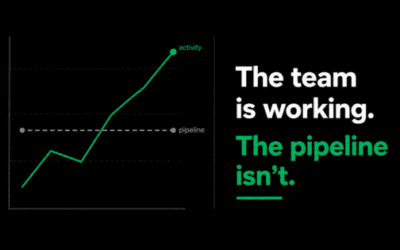
Those three components alone get a deal scored green on paper. A rep who has a quantified problem but no mapped buying process still has half of what BID requires, and that’s why a deal scored green in the pipeline can still fall apart at the end of the quarter.
How BID Gets Quantified
Getting a real number takes three connected pieces of training: business acumen, key metrics fluency, and customer business fluency, the specific skills that turn “how big is this problem” into a defensible figure instead of a guess. Enablement programs frequently build one of the three and skip the other two. Gartner has found that 93% of B2B buyers require an internal business case before approving a technology purchase, so the buyer is building that defensible number either way. The only question is whether it comes from a quantified, verified figure in the sales conversation, or gets built without the rep’s input at all.
Business acumen. A rep who can’t read a P&L or explain the difference between revenue and margin can’t translate a buyer’s complaint into a dollar figure. Credibility with a VP or CFO comes from the ability to talk about business problems in business terms, not from rapport.
Key metrics fluency. Every product moves specific metrics: win rate, churn, customer acquisition cost, time to close, operational efficiency. A rep trained on those metrics can turn “it’s costing us a lot” into “customer acquisition cost is $340 against an industry average of $180, and at current volume that’s a $2.6 million annual gap.” That specificity makes a number usable in a deal review and defensible in a forecast.
Customer business fluency. A rep who understands how the buyer’s business makes money, where its margins come from, and what pressure the buyer’s leadership is under can connect a stated problem to a number the buyer’s own executives already track. Without that fluency, the rep is guessing at what matters to the person who signs.
Put those three together and every rep has a minimum standard for quantification, not just whatever number they can work out alone on a call. Deals with full, buyer-verified BID close at roughly 63%, according to ASG’s client data, against 8% for deals with missing or unconfirmed data. The reps and the product are the same in both groups. The only difference is whether the number was quantified and confirmed before it reached the forecast.
What “Buyer-Verified” Requires
Verification is the step that separates BID from a well-written rep note, and it’s the one enablement programs treat as optional.
Buyer-verified means the number came directly from the buyer, not from the rep’s interpretation of the call. A useful test: pick a deal your best rep is most confident about. Call the buyer directly, no rep on the line, and ask them to describe the problem, its impact, and what happens if nothing changes. Unscripted, in their own words. If what comes back doesn’t match what’s sitting in the CRM, the BID was never verified. It was recorded.
Procedurally, buyer-verification requires three things a manager can inspect during a deal review, rather than take on faith:
The number appears in the buyer’s own language in call notes or transcripts, not paraphrased into the rep’s vocabulary.
The buyer has confirmed the number back, either by repeating it, agreeing to it explicitly, or referencing it unprompted in a later conversation.
More than one person on the buyer’s side has independently referenced the same problem or the same order of magnitude, which rules out a single champion inflating a number to justify their own initiative.
A rep-interpreted number is a yellow flag rather than a disqualifying red one. It means the deal needs one more call before that field counts toward a green score. Treating an unconfirmed number as though it were verified is the specific failure mode that produces confident forecasts that miss.
BID Versus a Rep’s Notes
| Dimension | Rep-Interpreted Note | Buyer-Verified BID |
|---|---|---|
| Problem | “They have visibility issues in their pipeline” | “Reps can’t run business-level discovery, confirmed by VP Sales” |
| Impact | “This is costing them a lot” | “$4.2M in lost ACV annually, confirmed by the CFO” |
| Root cause | “Their training program isn’t working” | “Skills Layer training ends at the workshop, zero manager reinforcement, confirmed by two managers independently” |
| Source | Rep’s summary in the CRM | Buyer’s own words, in a transcript or confirmed on a later call |
| Forecast use | Cannot be scored consistently | Feeds the 5 C’s Clarity test directly |
Why CRM Forecast Fields Need to Hold BID Instead of Stage and Close Date
CRM ships, out of the box, with generic fields: stage, amount, close date, maybe a free-text notes field. None of that is BID, and none of it can be scored. BID-specific fields, structured around a documented Problem Identification Chart and scored against a written rubric, require configuration work that generic, out-of-the-box setups don’t include.
The practical failure looks the same everywhere. Reps don’t update structured fields because updating them doesn’t feel like the work. If a CRM has a generic “notes” box, filling it in is administrative overhead. If the CRM has fields built around the buyer’s specific quantified problem, impact, root cause, future state, and decision criteria, filling it in is the same five minutes of typing, but the resulting data is usable. It can be scored, compared across deals, and rolled into a forecast that means something.
This is also the direct link between BID and forecast accuracy: the same red, yellow, green deal-scoring mechanics that turn buyer input data into a forecast category only work if BID is captured at the field level, tied to the methodology’s own Problem Identification Chart. Skip that, and every gap in the underlying data shows up in the forecast built from it.
How BID Moves Through a Revenue System
BID is trained, captured, and validated in three different places, and each one does a different job. Reps learn what BID looks like for their specific ideal customer profile during initial training. Frontline managers inspect it deal by deal, checking whether it’s complete and buyer-verified rather than rep-interpreted. Forecast validation checks whether the quantified, verified BID is strong enough to support a buyer’s real readiness to close, not just whether the fields are filled in.
That third step matters because complete BID and a closeable deal are not the same thing. A deal can have every BID field filled in, quantified, and verified, and still stall if the buyer hasn’t resolved internal consensus or hasn’t taken concrete action toward purchase. BID proves the problem is real and costly, but it says nothing about whether the buyer is ready to act on it. That’s a separate question, and it requires its own validation layer, built to test buyer readiness rather than problem severity.
Frequently Asked Questions
What is Buyer Input Data (BID)?
Buyer Input Data is the specific, buyer-verified intelligence that proves a buyer’s cost of inaction exceeds their cost of action. It includes a quantified problem, its business impact, its root cause, the buyer’s future state, the buying process, decision criteria, and the next commitment the buyer has agreed to. It must be expressed in real numbers and confirmed in the buyer’s own words, not interpreted or estimated by the sales rep.
How is BID different from BANT or MEDDIC?
BANT and MEDDIC are qualification frameworks: ways to organize information about a deal, such as budget, authority, or metrics. They don’t define what a complete answer looks like for any of their categories, which is why reps at the same company using the same framework routinely give different answers to “what metrics are you looking for.” BID is a standard for the quality and verification of the data itself, applied inside whichever qualification framework an organization already uses to organize it.
What does “buyer-verified” mean in practice?
It means the number or claim came from the buyer directly, in their own words, and has been confirmed rather than merely stated once. A manager can test this by checking whether the language in the CRM matches the buyer’s own language from call transcripts, and whether more than one person on the buyer’s side has independently referenced the same problem or impact. A number the rep wrote down after a single ambiguous comment is not yet verified.
How much detail does a number need before it counts as quantified?
It needs a specific figure tied to a specific time period and confirmed by the buyer. “It’s a big problem” is not quantified. “$2.3 million a year in churn, tied to a 47-day onboarding process against a 14-day target” is quantified. The test is whether the number could be defended by the buyer in a meeting the rep isn’t in.
Why do CRM notes fields fail to capture BID?
A free-text notes field lets BID exist as a paragraph a rep wrote and nobody scores. Structured fields built around a documented methodology force the problem, impact, root cause, and other BID components to be entered discretely, which makes them comparable across deals, scoreable against a rubric, and usable in a forecast calculation. Free text can hide the fact that a field is missing entirely.
Can a deal have complete BID and still not be forecastable?
Yes. Complete, quantified, buyer-verified BID proves the problem is real and costly, but it doesn’t prove the buyer is ready to act on it. That takes a separate validation step testing buyer readiness: whether the buyer controls their own buying process, whether the right people are aligned, and whether they’ve taken concrete action toward purchase. BID is the foundation that step is built on.
Who should own building BID-specific CRM fields?
Sales operations typically owns the CRM as a platform, but what gets captured inside it, and how it’s structured around the sales methodology, has to be owned by whoever owns that methodology. If those two groups don’t coordinate, the CRM ships with generic fields that don’t map to how the organization diagnoses buyer problems, and reps use a notes field instead.
Sales teams evaluating whether their own discovery produces this level of specificity can start with ASG’s Gap Selling training, which builds the Problem Identification Chart and BID capture directly into how reps are certified to run discovery.


0 Comments