

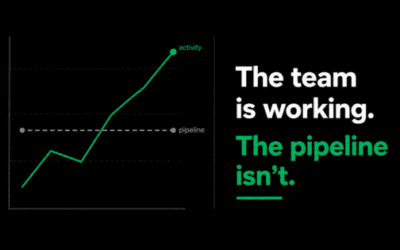
A B2B company hits its revenue number for three years running. The CEO assumes the business is healthy. The board congratulates the team. The CRO presents the steady-state slide deck. The growth story looks intact.
Then a buying event triggers. A PE-led recapitalization. A late-stage VC round. A strategic acquisition. The buyer sends in a commercial diligence team. An independent accountant arrives for the Quality of Earnings review. And what was a healthy growth story on the inside becomes a shit show on the outside.
The customer concentration is too high. The forecast variance is two or three times what comparable peers run. The win rate on “committed” deals is half what the CRM reports. The end-of-quarter discount pattern looks like revenue pull-forward. A handful of key people control the major accounts. The sales process lives in the heads of two senior reps, not in a documented system.
None of these findings invalidate the revenue. The revenue is real. The number was hit.
But the multiple comes in at 4x instead of 8x. The deal restructures with an earnout that shifts the risk back to the seller. The buyer walks. The CEO is in shock. The company hit the number. How did they end up at half the valuation they expected?
The answer is what they didn’t have under the number. A system.
This post is about what PE firms and late-stage investors actually look for in a sales organization, where random, heroic, and peacock sales orgs fail under that scrutiny, and what the difference is worth in dollars. The directional evidence is clear. A sales organization with a real, documented, predictable system commands a multiple-point premium over a comparable org that hit the same number through heroics, luck, or favorable conditions. The gap is measurable, the gap is large, and the gap shows up at exactly the moment a CEO and board can least afford it.
The Four Orgs Under the Number: Random, Heroic, Peacock, Compounding
Three patterns produce the findings this post describes. They aren’t mutually exclusive, and most underperforming orgs are some blend of all three.
Random. The Random org has the inventory of a system — playbooks, methodology, CRM fields, training programs, a vendor list — but no organizing logic above them. Each piece was bought or built reactively, in isolation. A new playbook because product marketing finished one. A micro-training because three reps lost competitive deals last month. A negotiation refresher because the CFO mentioned discount levels. A DISC assessment because someone got excited at a conference. Every initiative is real. None of them connect to each other. None of them trace to a business number. Strategic priorities shift every few weeks; the function reacts to each one, plugs the leak, moves to the next. A diligence team finds the inventory and can’t find the thesis — no documented logic for why each piece exists, how it ties to the others, or what number it was built to move.
Heroic. The Heroic org makes the number through brute force and will. Make the number at all cost is the operating principle, and it has plagued sales for decades. No excuse to fail. No excuse to miss. Whatever it takes. The mechanism: deep end-of-quarter discounting, deals pulled forward from next quarter into this one, manager rescue of deals off rep desks, top reps personally carrying the deals that matter. Each quarter borrows from the next, so the next quarter is harder, so the brute force gets bigger. The org becomes myopic. Every decision optimizes for this month, this quarter, this year, and the long-term revenue and profit being compromised in the process are invisible to almost everyone inside the org. A diligence team finds a back-loaded close calendar, a discount pattern that worsens in the final week, a deal mix concentrated in two or three reps, and forward quarters that look weaker than the trailing twelve months suggest.
Peacock. The Peacock org has built the work an enablement function is supposed to build — programs, certification, content library, methodology rollout, dashboards. All of it is genuinely well-designed and well-delivered. Certification rates clear ninety percent. Content gets used. Onboarding lands. By every L&D standard, the function is doing the job correctly. What it doesn’t have is the inspection layer above the work. No manager cadence that runs the methodology in deal reviews. No coaching framework actually executed weekly. No deal-level reinforcement that converts well-built training into changed behavior on real opportunities. The system is the appearance of a system. A diligence team finds a polished GTM motion on paper that hasn’t moved win rate, ramp time, ACV, or forecast accuracy in eight quarters — and finds managers who can describe the methodology but can’t show where it’s being inspected in a real deal.
A real sales system — what Gap Revenue Performance calls the Compounding Org — is the absence of all three. The work is connected to an organizing logic, the cadence is inspected, and the number gets made without brute force. Every diligence finding below maps back to one of the first three patterns.
The Premise: Buyers Don’t Pay for Revenue. They Pay for the System Underneath It.
When a strategic buyer or a PE firm evaluates a company, they are not buying historical revenue. Historical revenue is a fact, not an asset. They are buying future revenue, the cash flows their financial model projects forward.
The question every diligence team asks, in different forms, is whether this revenue can continue, scale, and behave predictably under new ownership.
That question gets answered through the system underneath the revenue. The pipeline process. The qualification discipline. The forecast methodology. The customer relationships. The manager bench. The comp design. The documented methodology. The operational cadence. The system is what produces revenue in the future, after the founder steps back, the heroic CRO leaves, the favorable market shifts, or a top customer churns.
If the system is real and documented and producing predictably, the buyer pays for the revenue and for the implicit promise that the revenue continues. If the system is random, undocumented, or dependent on a small number of people, the buyer applies a discount because they are now underwriting risk the seller’s headline number didn’t reveal.
This isn’t theory. It is what every PE commercial diligence team is trained to find.
What “Withstanding Scrutiny” Actually Means
A buying event triggers a level of scrutiny most CEOs and CROs have never been on the receiving end of. The diligence isn’t a quarterly board update. It is a forensic examination of every claim the trailing twelve months of financials are making.
The diligence team typically includes:
- A Quality of Earnings (QofE) accounting firm, hired by the buyer, that independently recalculates normalized EBITDA from the general ledger, tests every management adjustment, evaluates revenue recognition and cut-off, and identifies one-time items that don’t represent recurring earnings.
- A commercial diligence firm that examines the sales pipeline, win/loss data, customer cohorts, pricing, the GTM motion, forecast accuracy versus actual results over multiple quarters, and the sales process maturity.
- Customer reference calls, sometimes 20 to 50 of them, to validate the strength of the relationships.
- Sales team interviews to assess capability and dependence on specific individuals.
- Cohort analysis of revenue retention, expansion, and churn.
Each workstream asks the same underlying question. Is the revenue we are buying real, durable, and producible without the people who happen to be in the seats today?
A real sales system answers all of those questions favorably. A random one fails one or more of them, and the price comes down.
The Specific Findings That Reduce Valuation, and How They Play Out
The findings below are what commercial diligence and QofE consistently surface in sales orgs that didn’t build the system. They are presented in roughly the order PE buyers weight them. Key-person and customer concentration come first because they are the easiest to verify and the most directly tied to deal walks. Revenue quality and operational maturity follow because they govern the integrity of the trailing-twelve-months number itself. Forecast variance comes next as the discipline signal that ties the operating system to the financial model. Unit economics and revenue durability close because they are the forward-looking signals buyers use to price what the future cash flows are actually worth.
Key-Person Dependency: From Compression to Earnout to Walk
The “key man discount” is one of the best-documented findings in M&A advisory work, most rigorously studied in owner-operated lower-middle-market transactions ([Pepperdine Private Capital Markets Report](https://digitalcommons.pepperdine.edu/gsbm_pcm_pcmr/), IBA Market Database) where the discount has been measured at 30 to 50 percent versus comparable owner-independent businesses. In PE/VC-backed B2B SaaS, the same dependency presents differently. Not as a clean discount on an SDE multiple, but as one of three outcomes the diligence team flags. Mild key-person concentration produces revenue-multiple compression of one to two turns. Material concentration triggers earnout structures that shift 12 to 24 months of risk back to the seller. Extreme concentration — the founder is the customer relationship, or the CRO personally closes every large deal — produces deal walks.
Where it shows up in diligence. Customer reference calls. Sales team interviews. The buyer asks the top 10 customers who their primary relationship is at the company. If the answers are “the CRO” or “the CEO” or “Tom in account management” instead of “the company” or “the account team,” that’s a key-person finding. The buyer also asks the sales team how deals get done. If the answer involves the CRO personally getting on every $250K-plus call, that’s another key-person finding.
Where the seller misses it. The dependency feels like dedication. The CRO who is in every big deal looks committed. The CEO who personally manages the relationship with the largest customer looks engaged. Internally, these patterns get celebrated. In diligence, they get priced as risk.
What the system looks like. A real revenue system is observably independent of any single person. The methodology produces results across the team. The deal review process documents what is happening on every account, so the system holds the information, not the individuals. Account ownership is multi-threaded. Customer relationships extend across multiple touchpoints on both sides.
Customer Concentration: Compression at One Threshold, Walk at Another
Customer concentration produces two different outcomes at two different thresholds. At extreme concentration — single customer above 40 to 50 percent of revenue, or material renewal risk on the top accounts — buyers commonly walk or restructure the deal with an earnout that pushes 12 to 24 months of risk back to the seller. At meaningful but less extreme concentration — top three customers in the 30 to 40 percent range — the more typical outcome is revenue-multiple compression of one to two turns versus a diversified comparable in the same growth tier. Different thresholds, different responses, but both move the valuation in the same direction.
Where it shows up in diligence. The commercial diligence team builds a customer cohort analysis. They look at revenue by customer for the trailing 24 to 36 months. They identify the top 5, top 10, and top 20 customers as a percent of revenue. They look at contract terms. Are the big customers locked in for two or three years, or are they month-to-month? They evaluate concentration by industry and geography too.
Where the seller misses it. When the sales org has been led by a Hero CRO, the biggest accounts often came from the CRO’s personal relationships or from a small number of star reps. Internally, this looks like success. In diligence, it looks like risk.
What the system looks like. A real revenue system produces broad-based pipeline and broad-based win rates. The methodology works for new reps and experienced reps. The ramp program brings new hires to productivity. Customer relationships are multi-threaded across multiple people on both sides. Top customer percentage gets monitored as a metric, not just as a celebration.
Revenue Quality and Operational Maturity
Buyers attack revenue quality from two sides at once. The QofE team investigates whether revenue was accelerated into the measurement period through accounting mechanisms — early invoicing, channel stuffing, contract restructuring affecting recognition timing, or improper cut-off — to inflate trailing twelve months results. When QofE finds it, they adjust normalized EBITDA downward and apply additional scrutiny to every other revenue-quality claim. In parallel, the commercial diligence team examines the GTM patterns underneath the revenue: discount practices by month and by quarter, comp plan design, and whether deal terms changed in the final weeks of each quarter to close deals that weren’t yet closeable.
What both workstreams converge on is a single question. Is there a documented sales system underneath the revenue, or is the revenue the product of individual heroics, undocumented practice, and end-of-quarter creativity? A documented system means a buyer can install new leadership and the revenue continues. An undocumented one means the revenue may walk out the door with the people who produced it.
Where it shows up in diligence. The QofE team analyzes invoice timing relative to contract dates, tests revenue recognition cut-off, and reviews contract modifications that affect when revenue was booked. The commercial diligence team builds the discount-pattern analysis by month and by quarter, finds the discount spike in the last 30 days, and asks why. They request the sales playbook, the methodology documentation, the coaching framework, the deal review cadence, and the operating definitions of each pipeline stage. They interview managers about whether the methodology is actually run in deal reviews, or only referenced in slides.
Where the seller misses it. A spike in end-of-quarter close volume looks internally like the team grinding to hit the number. From the buyer’s perspective, it raises a different question. Were those deals real on day 60 of the quarter, or were they invented in days 75 through 90 through discount or term concessions? The absence of documented operational discipline often goes unnoticed inside the company because the team has produced results despite it. Documentation feels like overhead until a buyer arrives and asks for it.
What the system looks like. A real revenue system produces a smooth close calendar with normal end-of-quarter compression, not a hockey stick. The discount pattern doesn’t spike in the final week. Comp design rewards quality and durability, not just calendar-month closes. The methodology is documented, taught, inspected in deal reviews, and reinforced in coaching. Most critically, a new CRO can be installed and the methodology continues running because it is the system, not the person.
Forecast Variance: The Cleanest Operational-Discipline Signal
Forecast accuracy is one of the cleanest multiple drivers PE buyers price on. Variance under 10 percent over a multi-quarter window is a marker of operational discipline buyers triangulate alongside NRR, growth durability, and pipeline quality. Variance above 20 percent, especially when it persists across multiple quarters, triggers risk-weighting in the valuation work. The compression isn’t a fixed schedule; it depends on whether the variance is a one-quarter anomaly or a multi-quarter pattern, and how it interacts with the other diligence signals. Either way, predictability commands a premium, and variance pays for it.
Where it shows up in diligence. The buyer’s commercial diligence team requests the last eight quarters of forecast data. They compare commit-to-actual at the start of each quarter against actual results. They calculate the variance. If the variance is wide and inconsistent, the buyer concludes that management cannot predict the business. That conclusion gets priced in immediately.
Where the seller misses it. Most sales organizations measure their forecast on quarterly attainment, not on commit-vs-actual variance over time. A 95 percent attainment quarter feels like success. But if the commit was set at 80 percent of plan and the actual came in at 76 percent of plan, the variance is meaningful, and the pattern is what the buyer is reading.
What the system looks like. A real revenue system produces forecast variance under 10 percent over a multi-quarter window. That doesn’t happen by accident. It happens because deal qualification is disciplined, the Buyer Input Data (BID) on each deal is captured before the deal is committed, the methodology is adopted across the team, and the inspection cadence catches optimism before it ships to the forecast.
Unit Economics and Revenue Durability
CAC payback period is one of the cleanest unit-economics signals a buyer can examine. Sub-12-month payback is consistently cited as a marker of premium valuation in B2B SaaS by major SaaS metric studies (KeyBanc Capital Markets SaaS Survey, Bessemer State of the Cloud, OPEXEngine). The premium itself varies by growth tier and category; the directional signal is unambiguous. Faster payback signals a better sales system underneath.
CAC payback is downstream of sales execution. Faster payback comes from higher win rates, less discounting, faster ramp, and better deal qualification. None of those are CAC inputs. All of them are sales-system outputs. The buyer reads CAC payback as a proxy for the operational discipline that produced it.
NRR (net revenue retention) is the matching forward signal on the customer side. The strongest valuation premiums in B2B SaaS go to companies with high NRR plus proven forecast reliability. According to the [Bessemer Cloud Index, top-tier public SaaS companies with NRR above 120 percent and durable growth traded in the 11x revenue range in 2024, well above the broader SaaS median, which sat closer to 5 to 7x depending on growth tier. Forecast reliability is one of the supporting signals that distinguishes the top tier from the median. Companies with high forecast variance and uncertain NRR don’t command those premiums.
Where it shows up in diligence. The buyer builds a CAC payback model from sales and marketing spend versus the gross profit from new customers, by cohort and by channel. They model it against industry benchmarks. They examine NRR by customer cohort over time, tracking expansion versus churn, and read the trajectory. Combined, these two analyses paint the durability picture. Is this revenue base producing increasing customer lifetime value, or is the business running uphill against churn?
Where the seller misses it. Most sales organizations track quota attainment and forecast accuracy, not CAC payback or cohort NRR trajectory. Those metrics live in CFO reports, not on the sales floor. The connection back to sales execution often isn’t made internally. The sales team optimizes for closing the deal; nobody connects the discount given in the closing motion to the CAC payback the buyer will eventually price.
What the system looks like. A real revenue system produces favorable unit economics and durable revenue because the upstream sales motion qualifies for fit before closing, sets accurate expectations during the cycle, prices for value rather than discount, and hands off cleanly to customer success with a documented understanding of what the customer was buying and why. NRR is a downstream consequence of upstream sales discipline.
The Aggregate Picture: What the Gap Costs
At the exit, the difference between a real sales system and a random one shows up in the multiple.
A $50M revenue B2B company with a real, documented, predictable revenue system, with forecast variance under 10 percent, top customer under 15 percent of revenue, multi-threaded customer relationships, documented operational machine, CAC payback under 12 months, and NRR above 110 percent, can trade in the 8 to 10 times revenue range. That is a $400M to $500M outcome.
The same revenue from a random, heroic, or peacock sales org, with forecast variance above 20 percent, top customer at 35 percent of revenue, founder or CRO holding the key relationships, no documented methodology, end-of-period discount patterns, and CAC payback above 18 months, may trade at 3 to 4 times. That is $150M to $200M. Possibly less. Possibly with an earnout structure that delays half the proceeds and pushes them to risk.
That’s a $200M to $350M gap on $50M of revenue. The revenue is the same. The system is the difference.
Same headline revenue. Half (or less) the value. Or no transaction at all.
That is what the absence of a system costs. It doesn’t show up in the management slide deck. It shows up in the term sheet.
Why This Connects to the Modern CRO
We recently published a position paper, The Modern CRO: Why the Role Keeps Failing and What It Has to Become. The framework in that paper identifies five operating modes a CRO can run in. Four of them produce revenue without building the underlying system. The fifth, the Builder, builds the system that withstands the diligence described in this post.
The connection is straightforward. The Builder produces predictable revenue with a documented operational machine, broad-based customer relationships, low key-person dependency, and the kind of forecast accuracy and unit economics that earn multiple premiums. The other four (the Beneficiary who rode an inherited engine, the Surfer who rode a market, the Hero who forced the number through unsustainable means, the Lucky who depended on whales and timing) produce revenue that may look identical on the income statement but fails diligence in measurable ways.
If you are a CEO or board member preparing for a future buying event, the choice of CRO is a choice about whether your sales org will withstand scrutiny when the diligence team arrives. That choice gets made years before the buyer is at the door.
What CEOs and Boards Should Do Before a Buying Event
The work is not last-minute. Most of the findings above cannot be fixed in the 90 days before a diligence team shows up. They are products of multi-quarter or multi-year operational discipline.
Specifically:
- Identify and reduce key-person dependency. Multi-thread relationships on the largest accounts. Build the system that holds knowledge, not individuals. This is the highest-stakes finding because it directly drives walk risk.
- Diversify customer concentration. If your top customer is over 25 percent of revenue, treat it as a strategic risk and a valuation risk simultaneously.
- Document your sales process and methodology. A documented operational machine is worth a multiple premium. An undocumented one is worth a discount.
- Manage end-of-period discount patterns. If your discount rate spikes in the last 30 days of every quarter, that pattern will surface in commercial diligence.
- Audit your forecast variance over the last eight quarters. If it is above 15 percent, you have time and incentive to fix it. The fix is not better forecasting software. It is better discovery discipline upstream.
- Measure CAC payback and NRR on the sales operating dashboard. Make them visible inside the sales org, not just inside finance. Connect the metrics back to the sales execution that produces them.
- Build the manager bench. Buyers look for distributed leadership, not for one heroic operator.
Each of these is a multi-quarter project. None of them happens after the term sheet arrives.
Frequently Asked Questions
What is commercial due diligence, and how is it different from financial due diligence?
Commercial due diligence examines the GTM motion, the sales process, the pipeline, the customer cohorts, the win-loss data, the pricing, and the competitive position. Financial due diligence (typically via Quality of Earnings / QofE) examines the accounting and the quality of the earnings. They run in parallel and inform each other. QofE attacks the integrity of the trailing twelve months financials at the accounting level — normalized EBITDA, revenue recognition, cut-off, one-time items. Commercial diligence attacks the operational machine that produced those financials. Most multiple-compression findings on the sales side come out of commercial diligence, not QofE.
What does Quality of Earnings (QofE) due diligence look for in a sales organization?
QofE accountants independently recalculate normalized EBITDA from the general ledger, test every management adjustment for accuracy, evaluate revenue recognition and cut-off, and identify accounting adjustments the seller missed. Specifically in the sales context, they investigate revenue pull-forward (early invoicing, channel stuffing, contract restructuring affecting recognition timing), revenue recognition irregularities, and one-time items mislabeled as recurring. Discount-pattern analysis, forecast variance versus actuals, comp plan design, and methodology adoption are typically handled by the parallel commercial diligence workstream, not by QofE itself.
How does PE valuation actually differ between a system-driven sales org and a random one?
The valuation difference shows up across multiple inputs the diligence team scores. Forecast variance compresses or expands negotiating power depending on whether the variance is a one-quarter anomaly or a multi-quarter pattern. Key-person dependency produces three different responses depending on severity: revenue-multiple compression, earnout structures that shift risk back to the seller, or deal walks. Customer concentration compresses multiples in the 30 to 40 percent top-three range and triggers walks at extreme single-customer thresholds. NRR above 120 percent paired with forecast reliability is a top-tier signal in B2B SaaS; Bessemer Cloud Index data shows top-tier companies trading in the 11x revenue range in 2024 versus a broader SaaS median closer to 5 to 7x. The aggregate gap between a system-driven org and a random one is large enough to change the outcome for the CEO, the board, and every shareholder on the cap table.
What is the “key man discount” and how is it calculated?
The key man discount is the reduction buyers apply when a business’s performance, relationships, or capability is concentrated in one person, usually an owner, founder, or top executive. The 30 to 50 percent discount figure is most rigorously documented in owner-operated lower-middle-market M&A ([Pepperdine PCMR](https://digitalcommons.pepperdine.edu/gsbm_pcm_pcmr/), IBA Market Database). In PE/VC-backed B2B SaaS, the same dependency presents differently: revenue-multiple compression at one severity, earnout/risk-shift structures at another, and deal walks at the extreme. It is identified through customer reference calls (whose name comes up when customers describe the relationship), sales team interviews (who actually closes the deals), and review of account-by-account customer history.
How does customer concentration affect valuation?
Buyers respond to concentration differently at different thresholds. At extreme concentration, single customer above 40 to 50 percent of revenue or material renewal risk on the top accounts, buyers commonly walk or restructure the deal with an earnout that pushes 12 to 24 months of risk back to the seller. At meaningful but less extreme concentration, top three customers in the 30 to 40 percent range, the typical outcome is revenue-multiple compression of one to two turns versus a diversified comparable in the same category and growth tier.
How does forecast accuracy affect company valuation?
Direct multiple impact. Forecast variance is one of the cleanest signals PE buyers use to triangulate operational discipline. Variance under 10 percent over a multi-quarter window is a premium signal. Variance above 20 percent, especially when it persists across multiple quarters, triggers risk-weighting in the valuation work. The compression isn’t a fixed schedule; it depends on how the variance interacts with NRR, growth durability, and the other diligence signals. PE buyers treat persistent variance above 20 percent as evidence that management cannot predict the business, and price accordingly.
What is CAC payback and why does it matter to PE valuation?
CAC payback is the time it takes for the gross profit from a new customer to repay the customer acquisition cost. Sub-12-month payback is consistently cited as a marker of premium valuation in B2B SaaS by major SaaS metric studies (KeyBanc Capital Markets SaaS Survey, Bessemer State of the Cloud, OPEXEngine). The premium itself varies by growth tier and category, but the directional signal is unambiguous. CAC payback is downstream of sales execution: faster payback comes from higher win rates, less discounting, faster ramp, and better deal qualification.
What is the relationship between sales system quality and revenue durability (NRR)?
A real revenue system produces durable revenue because the sales motion qualifies for fit before closing, sets accurate expectations during the cycle, and hands off cleanly to customer success. High NRR is a downstream consequence of disciplined upstream sales execution. Companies that combine high NRR with proven forecast reliability earn the highest revenue multiples in their categories.
How does a documented sales methodology affect a buying event?
A documented, adopted methodology is treated as evidence of operational maturity. Buyers look for the playbook, the stage definitions, the forecast SOP, the deal review template, the coaching framework, and the measurement system. When those are present and operating, the buyer reads the sales org as a real system. When they are missing or partial, the buyer applies a discount for operational risk.
Can a heroic or founder-led sales org be repositioned for a better valuation?
Yes, but the work takes multiple quarters or years. The fixes (documented methodology, multi-threaded customer relationships, distributed leadership, forecast discipline, durable retention) are operational projects, not term-sheet projects. A 24 to 36 month preparation runway is typical for orgs that want to move from a heroic profile to a system-driven one before a buying event.
Conclusion: Build the System Before the Diligence Team Arrives
Not all revenue is created equal. The headline number on the income statement is the start of the conversation in a buying event, not the end. What the buyer pays for is what’s underneath: the system, the predictability, the durability, the operational maturity.
Sales organizations that built that system over multiple quarters and years earn multiple-point premiums when they transact. Sales organizations that produced the same revenue through heroics, key-person dependency, customer concentration, or favorable conditions earn the discount. The gap is large enough to change the outcome for the CEO, the board, the investors, and every shareholder on the cap table.
The choice is made years before the buyer is at the door. The system either gets built or it doesn’t. The diligence team finds what the operating discipline produced.
For the full framework on revenue leadership that builds the kind of system this post is about, read our position paper: The Modern CRO: Why the Role Keeps Failing and What It Has to Become.
You don’t get the premium multiple for hitting the number. You get the premium multiple for proving the number can be hit again, without the people, the market, or the conditions that produced it the first time. That is the system. That is what survives diligence.
By Keenan, CEO of A Sales Growth Company. Author of Gap Selling, Gap Prospecting, and Gap Revenue Performance.

0 Comments