

Quick answer: A peacock sales org produces genuinely high-quality enablement work that does not change business outcomes. The program is well designed, well delivered, and well received, scoring highly on satisfaction and completion, and six months later win rate, ramp time, and ACV are unchanged. The cause is an inherited definition of finished. Most enablement functions were built out of Learning and Development, where a program is complete when it has been delivered. That single assumption means nobody owns what happens after launch, no one is accountable for whether the number moved, and the organization has no mechanism for discovering it was wrong.
Key takeaways
- A peacock org is not sloppy. The work is genuinely good, which is exactly why the problem persists unchallenged.
- The reported metrics all grade the work: sessions delivered, completion rate, satisfaction scores, certifications passed. None of them grade the business.
- The root cause is the L&D definition of done, where delivery equals completion.
- Because nobody owns the post-launch window, a program that failed is never labeled a failure. It quietly stops being discussed.
- That makes a peacock org structurally unable to learn. It has no mechanism for finding out it was wrong.
- The loop is expensive: numbers do not move, so the response is a better program, which is never graded either.
- The fix is not better content. It is moving the finish line to ninety days past launch, with a written baseline and target before anything is built.
What is a peacock sales org?
A peacock sales org is a sales organization whose enablement work is well executed and does not produce business results. It is one of four operating models in the Four Orgs framework from A Sales Growth Company, alongside the Heroic org, the Random org, and the Compounding org.
The distinguishing feature is quality. A random org is visibly disordered once you look at it: fourteen initiatives, none connected to a number. A peacock org has no visible disorder at all. Someone invested months in the program. The instructional design is real. The video production is current. The certification has teeth. Live sessions were well attended and well facilitated.
The program scored a 4.8. Completion landed around 94%. The CEO mentioned it on the all-hands.
Six months later, win rate is where it was, ramp time is where it was, and ACV has not moved.
Nobody calls that a failure. It received excellent reviews.
Why does sales training fail to change performance?
Look at what gets reported when a program wraps.
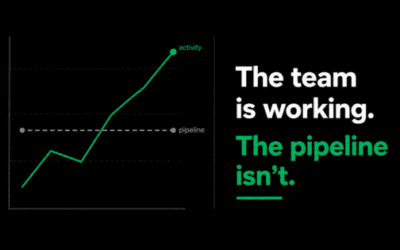
Sessions delivered. Completion rate. Satisfaction scores. Certifications passed. Content pieces produced. Every one of those metrics confirms that the work happened. Not one of them indicates that anything changed.
The organization is grading production, not performance.
A quick test: open your enablement dashboard and count how many metrics on it a CFO would recognize as a business result. For most organizations the honest answer is none.
This is not a competence problem, and it is not an effort problem. It is a definitional one.
What is the real root cause of a peacock org?
The inherited definition of finished.
Most enablement functions were wired out of Learning and Development. That is where the people came from and where the craft came from, and L&D is genuinely good at what it does: design a curriculum, build the materials, deliver them well, and measure whether people learned and liked it.
It also brought its completion standard. In L&D, a program is done when it has been delivered.
That single inherited assumption produces every symptom of a peacock org. It explains why the closeout deck is full of completion rates. It explains why the celebration happens at launch. It explains why the team begins the next build the following Monday. And it explains the structural gap that matters most: nothing after the launch belongs to anyone.
Trace it through. The program ships in March. By June, win rate has not moved. Whose job is it to notice?
Not enablement’s. They finished in March and it went well. Not the front-line manager’s. They did not build it. Not the CRO’s. They have a quarter to close.
So nobody notices. The program is never declared a failure, it simply stops being discussed, and by the time anyone asks whether it worked, there is nothing to compare against, because no one recorded what it was supposed to change.
A peacock org cannot learn. It has no mechanism for finding out it was wrong.
Why does the problem get more expensive over time?
Because of the loop it creates.
The numbers do not move, so the organization builds a better program. Better content, a better platform, a refreshed curriculum, possibly a new vendor. The answer to a program that did not work is always another program, because the previous one was never graded, so the only available explanation for the flat result is that the program was not good enough.
Each cycle costs more. Each cycle produces something more polished. The business metrics stay where they are.
How is a peacock org different from a random org?
These two get confused, and the distinction matters because the fixes are opposites.
| Random org | Peacock org | |
|---|---|---|
| What it looks like | Fourteen initiatives, visibly disconnected | One excellent program, no visible disorder |
| Where it fails | Diagnosis. The work was never pointed at a problem | Verification. The work often solved a real problem, then victory was declared at delivery |
| What’s reported | Volume and completion | Quality, satisfaction, and completion |
| The fix | Subtraction. Attach a number, kill what has no diagnosed problem | Move the finish line. Baseline before build, verification ninety days after |
Put simply, a random org cannot aim. A peacock org can aim and never checks the target.
That difference is why a peacock org is often the more frustrating of the two to sit inside. The team frequently did the diagnostic work correctly. Someone examined ramp time, concluded it was too long, and built a serious onboarding program to address it. That is real diagnosis and real craft. Then the program shipped, the finish line was crossed, and nobody ever found out whether ramp actually improved.
How do you fix a peacock sales org?
Not with better content. Content is the one thing a peacock org already has in abundance.
The fix is moving the finish line, and it has three parts.
Nothing ships without a baseline and a target. Before anything is designed, someone writes one sentence: we are moving this metric from here to there by this date. Not “improve ramp.” Ramp from 5.5 months to 4 months, and here is the current baseline as of this week. If nobody can write that sentence, the program is not ready to be built, and building it anyway produces something well made that changes nothing.
Nothing closes until the ninety-day readout. A program is not finished at delivery. It is finished when someone returns ninety days later and shows what happened to the named metric, including when the answer is that nothing happened. Especially then. Skipping that meeting is how organizations remain peacocks for a decade.
Remove satisfaction scores from the leadership readout. If a 4.8 out of 5 cannot tell you whether the business changed, it does not belong in front of the leadership team. Its only function there is to make everyone feel finished. Keep it for the facilitators if it helps them improve delivery. It is not a performance metric.
The signal that it worked is counterintuitive. You will know the change has taken hold the first time a program gets killed at the ninety-day mark and nobody is embarrassed about it. That is not failure appearing in your organization. It is the first evidence that your organization can distinguish between work and results.
Definition: A compounding sales org is one where the system delivers the results rather than the people, and where each quarter’s gain is retained rather than reset. Moving out of a peacock org toward compounding begins by refusing to call anything finished until its effect on a named business metric has been verified.
How to tell which sales org you are running
Before commissioning the next program, get an honest read on whether your current work is producing performance or production. The Four Orgs Assessment and the PCOS Capability Assessment at salesgrowth.com take about twenty minutes.
Frequently asked questions
What is a peacock sales org?
A sales organization whose enablement work is genuinely high quality and does not move business outcomes. It is one of four org types in the Four Orgs model, alongside Heroic, Random, and Compounding.
Why doesn’t sales training stick?
In a peacock org the issue is rarely the training itself. It is that the program was considered finished at delivery, so no one owned the period after launch, no baseline or target was recorded, and there was no mechanism to detect that behavior never changed.
What sales enablement metrics actually matter?
Business outcomes the finance organization would recognize: win rate, average contract value, ramp time, quota attainment, cycle length. Sessions delivered, completion rates, satisfaction scores, and certifications passed measure whether work happened, not whether anything changed.
Should we stop measuring training satisfaction?
Stop reporting it to leadership. Satisfaction data can help facilitators improve delivery, but presented as a headline result it substitutes for outcome measurement and makes the organization feel finished.
How long after a program should we measure impact?
Ninety days after launch, against a baseline recorded before the build began. The readout should happen whether the result is positive or not, and a program that produced nothing should be allowed to be retired without stigma.
Who should own whether a program worked?
Someone must, by name, before the program is built. The most common failure in a peacock org is that enablement owns delivery, managers own the number, and no one owns the connection between them.
About the source
This article is part of the Four Orgs series from A Sales Growth Company (ASG), the creator of Problem Centric® Selling and the architect of the Problem-Centric Operating System (PCOS™). It expands on the Peacock org described in The Modern Sales Org. Companion articles cover the Heroic org, the Random org, and the Compounding org. To see where your org stands, visit salesgrowth.com.
Sources
- The Random, Heroic, Peacock, and Compounding org types are ASG’s Four Orgs model.
- The observation that enablement functions commonly originate in Learning and Development, and carry L&D completion standards with them, reflects ASG’s engagement experience across client organizations rather than a published study.
- Widely circulated statistics on sales training retention and enablement ROI were reviewed for this article and excluded. The most commonly cited figures trace to secondary aggregator posts attributing research to houses that have not published under those names in years, and could not be verified against a primary source.

0 Comments